


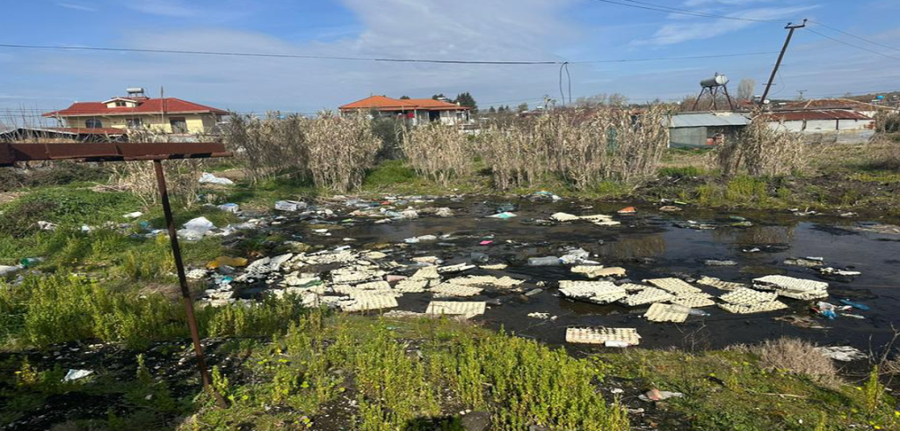
The oil area in Albania, Patos-Marinza, continues to remain one of the most problematic environmental points in the country, according to the findings of a special audit by the Supreme State Audit Office that sheds light on the alarming situation of pollution and the lack of institutional control.
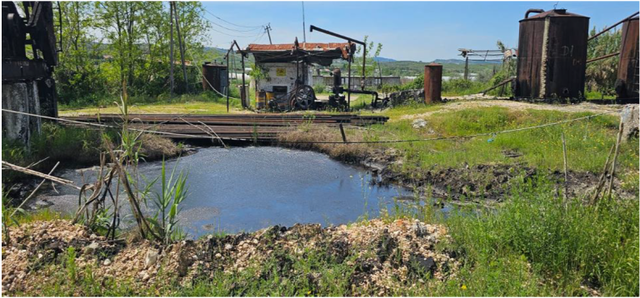
The audit shows that the ecological pits, places where hazardous residues extracted from oil processes are deposited, do not meet technical criteria, are not supervised by personnel, do not have warning signs or air emission monitoring systems. Ecological pit no. 2, with free access for people and animals, poses a high risk to the surrounding area. In the morning and evening, a strong smell is felt, which according to residents is directly related to the malfunctioning of the technological water plants, which should reduce the chemicals released during the oil extraction process.
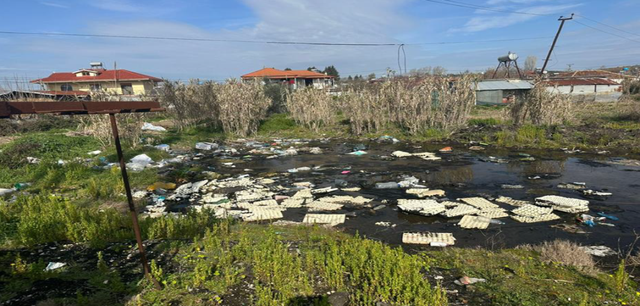
The situation is no better near abandoned wells, where the terrain is unfenced, with pools of polluted water, without any warning signs. Around them, there are hydrocarbon waste flows that spread to the vicinity of agricultural lands and there are no information signs indicating the prohibition of entry and movement.
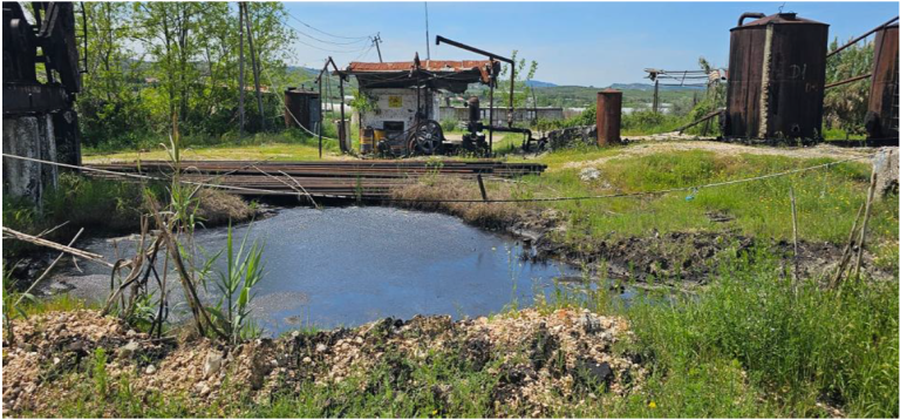
Furthermore, active oil wells are located near residential buildings or where agricultural and livestock activities take place, and in some areas the process of swamping has begun;
Although Patos–Marinëza is officially classified as an environmental hotspot, an area that requires rigorous monitoring of air, water and soil, the audit reveals that there is no monitoring station for key environmental indicators. This lack makes it impossible to notify the public when critical parameters – such as sulphur dioxide, nitrogen dioxide, ozone, carbon monoxide or PM10 particles – exceed permitted levels. In an area with intensive industrial activity, such an information gap poses a serious risk to the health of residents.
The report emphasizes that in the Fier area, the measured parameters show that the air quality in the area affected by the hydrocarbon extraction industry is outside the parameters allowed by the EU and the legal framework due to the high content of NO2 and other gases. As a result, the VOC values are also outside the allowed parameters, which are a result of the high values of NO2 reacting with other air pollutants in the area.
In the Patos-Marinza area, surface and groundwater are seriously polluted by oil wells, during extraction by pumps, from pipelines and pre-treatment plants, and sulfuric gas and various hydrocarbons are discharged into the air. The water used by these plants is discharged into the Gjanica River, where in addition to oil components, it also contains toxic substances.
The problems are further exacerbated by the fact that the State of the Environment Reports, compiled annually by the National Environment Agency, do not include data for Patos–Marinëz, despite the area being ranked among the most polluted in the country.
This makes official reporting disconnected from reality and undermines the ability of institutions to build evidence-based environmental policies. The lack of data diminishes transparency and leaves the public in the dark about the risks to the environment and health, the report says.
The audit also notes that monitoring of the situation by the National Environmental Agency and Albpetrol sh.a. is weak and insufficient, which has led to pollution of the air, water and soil around the ecological pits and abandoned wells. /ekofin.al