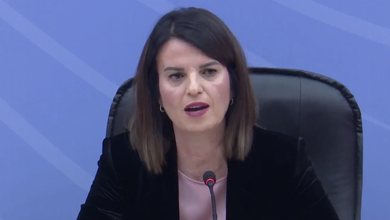



Public hospitals in Albania are entering, according to Health Minister Evis Sala, a “new phase of restructuring.” Not just new paint on the walls or a leak-proof roof, but a conceptual revolution: from funding by bed to funding by case. The DRG model, as the minister calls it, will make public funds “follow service and performance.”
In other words: money will no longer count beds, but patients. And maybe even diagnoses.
In theory, this sounds like the beginning of a new era of economic rationality. In practice, it remains to be seen whether patients will feel less like numbers – or simply “cases” coded into an Excel spreadsheet.
Because when we say "rationalization", it is often translated into Albanian as: we will do more with less.
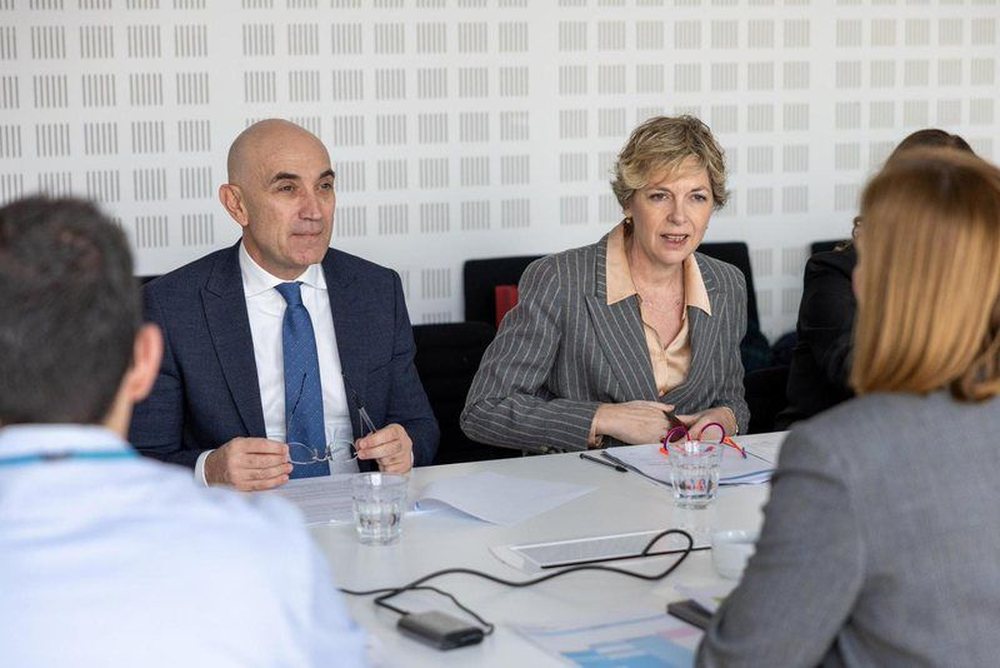
From Copenhagen, where the Ministry signed a cooperation agreement with the WHO European Office, the Minister spoke about universal access to quality healthcare. At the same time, Albania also proposed a European initiative to prevent digital violence against women and girls.
The ambition is admirable: from oncology to artificial intelligence, from DRG to digital violence. A minister who talks about the digital axis of healthcare and interoperable systems, while in many hospitals patients still ask at the counter if "there is a doctor today."
The reform in oncology through the establishment of the National Tumor Institute and the National Oncology Network, in collaboration with the Tumor Institute in Milan, is presented as the cornerstone of the new era. Likewise, the inclusion of AI in healthcare, as a sign of modernity.
Meanwhile, citizens expect something simpler: for funds to “follow the service” means for the service to follow them.
Because between the DRG, the Copenhagen agreements, and the digital axis, there is still a very earthly reality: the patient waiting, the family wandering from one door to another, and the doctor trying to do the most with the least.
At the end of the day, the reform may be called DRG, digital axis or performance measured by algorithm, but for the citizen there will be only one real test: do they receive the service when they need it. Until then, the impression remains that in Albania, financing models change, agreements are signed in Copenhagen and national institutes are declared, but the patient continues to finance with nerves, time and hope what the system still fails to provide with dignity.