

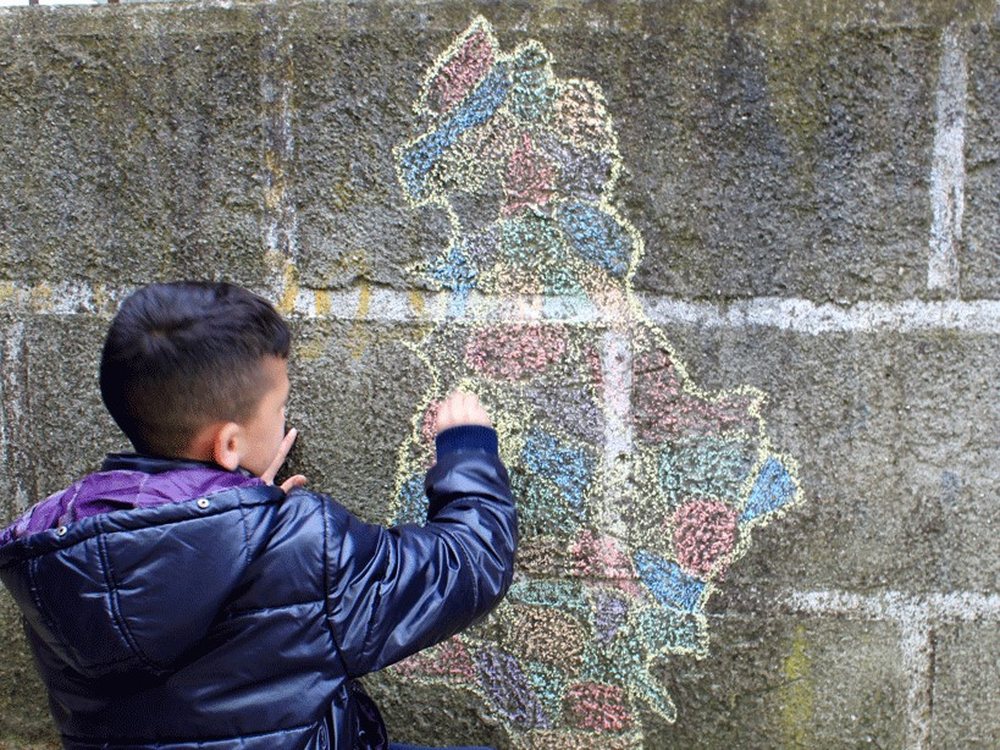
If you take a look at the map of Albania and the mayors, you will hardly miss the fact that, for some time now, many of the mayors have been living in Tirana and governing a municipality in the form of a governorate. Correspondence mayors are of two types: one side are those who became mayors as citizens of the respective cities, but have made enough money to occupy a house in Tirana. But there are also those who originate from the country where they were appointed to govern by the central government, in the service of the central government. Thanks to the lack of real decentralization of political power, a legacy of the communist regime, the cities and villages of Albania have become provinces, provinces “occupied” by the central government in Tirana and not political entities that constitute the nation.
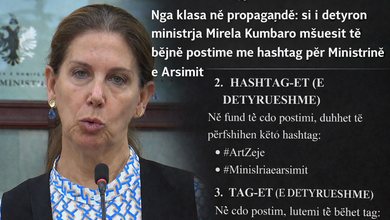
In the case of mayors delegated from Tirana, this is relatively obvious. What is completely invisible and should normally concern us more is the process of delegation from the post of mayor to the post of Administrator of the Administrative Unit and further, to the post of village elder. All of these are appointed by the mayors and are in the form of the mayor's gendarme in the administrative unit or in the respective village.
In short, it is not the village or the neighborhood of the city that has an eldership and a mayor, institutions through which they are politically organized and politically represented. It is the central government that, according to the model of the medieval principalities, appoints a bey or a baron or a count and the latter appoints a qehaja or a responsible knight, (and this is the only difference from the Middle Ages), not to bring soldiers and taxes for the king or the padishah, but to bring votes in elections.
If you want a little history of how the country got to where it is today, a short story is this: Albania has historically had about 2,800 villages and towns. In its natural state, each of these has its own political forces. At some point, early in the communist regime, apparently in an attempt to break down the political structures of the village, a reorganization was carried out by merging about a thousand villages as separate political entities and creating about 1,800 villages as top-down political entities. These 1,800 villages were later merged to form the entity known as the “united village” which was practically a cooperative. There were about 900 of these. Since 1992, very unwisely, the country has not returned to the village as the basic entity of social organization, but has merged cooperatives in pairs and threes, and sometimes not, to form about 392 communes. In many cases, the mayor was the president of the cooperative, an official appointed by the central government, not for the purposes of political representation, but for administrative purposes. The mayors, like the heads of cooperatives, did not answer to the people and did not represent the people. They answered to the head of the respective party and reflected the interests of these mayors, who in practice were not many, to the people. Since the top-down exercise of power that was a consequence of the communist regime did not change, both citizens and peasants remained politically unrepresented and their interests were ignored until, naturally, many of them took the path of emigration.
The mayors were replaced with administrators in 2015, further eroding political representation. The lack of political representation in the village is more noticeable, but this is equally true for the representation in the city, although it is not as noticeable.
Albania has another major problem, which is the presidential-type form of municipal administration, with the mayor being the de facto controller of the municipal council and the municipal council appointed by parties with no connection to representing citizens (or villagers, although in the political context all citizens are citizens regardless of whether they live in a village or a city).
The Albanian Parliament is in talks between the ruling majority and the opposition on something called a "reform" or "review" of the 2015 reform. Essentially, the obvious interest is the merger of several municipalities which, in 2015, were created as part of the division of feudal-style principalities between the two members of the ruling coalition, the SP and the LSI, which saw the problem as closely related to their own power and relations within the coalition and not to the needs of citizens (and villagers who in this context should have the designation "citizen" as constituent members of the polis) for political organization and representation.
Reducing the number of municipalities, and the fact that some are indeed very small, will help Edi Rama have fewer headaches in the upcoming local government elections. For example, he will have to appoint fewer governors than he does now. This will hardly solve the problem of citizen representation in political politics and will likely worsen the degree to which Albania is treated as a province of Tirana.
A true territorial and administrative reform must recognize the village and the city neighborhood as a political entity with its own organization, with a council and mayor elected by the citizens for the purpose of representing their interests in the municipality and the government and not vice versa. This, of course, must be accompanied by a real law on the division of powers, funds and taxes between the central government and local government. There can be no talk of local government when the project for the center of a city or village anywhere in Albania is a game for exercising the artistic tastes of the prime minister and not a project designed according to the needs of the city's residents. And likewise, there can be no democratizing reform for local government as long as the vast majority of taxes are collected at customs and managed by the prime minister. If there is no real democratization of the village and neighborhood through the election of the elders and the mayor and not through their appointment by the mayor, and if there is no real and politically neutral budget allocated to each municipality, this will not be a reform for local government but will be a reform for the way the central government exercises, among other things, local government./Reporter.al