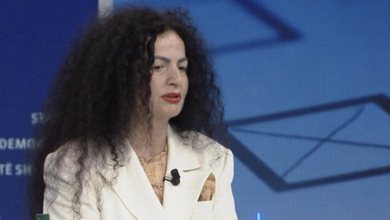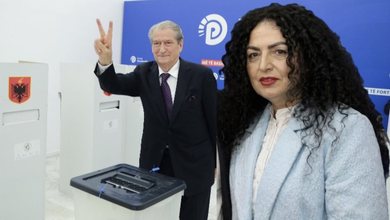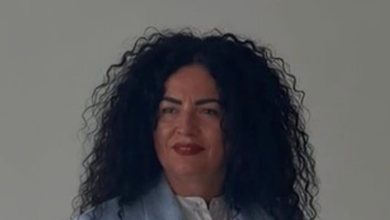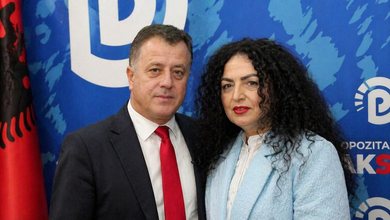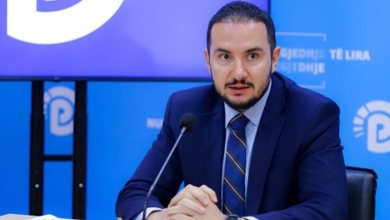


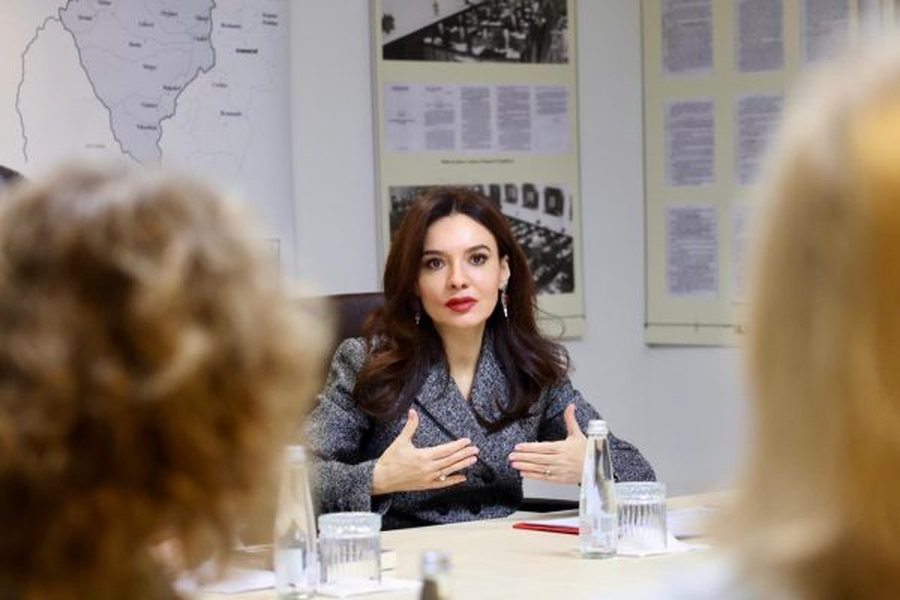
Elisa Spiropali has long been a dedicated and vocal supporter of the ruling Socialist Party – particularly its leader, Prime Minister Edi Rama, whom she once compared to Albania's national hero, Skanderbeg.
“We want the Albania that this man here, Skanderbeg, dreamed of. There is only one man who can make this happen, and that is Edi Rama,” she said at a rally in 2019, referring to Rama. For years, this sentence has accompanied her, almost becoming part of her political identity.
While the Socialist Party won election after election since 2013, its position remained unshaken – until March of this year, when the party prepared to vote to lift the immunity of former Deputy Prime Minister and Minister of Infrastructure, Belinda Balluku, who is accused by prosecutors of interfering in public procurement.
The case dragged on for months, as SPAK asked parliament to lift her immunity to allow her arrest, while the Socialist Party refused to do so – a decision that drew much criticism.
According to reports, the day before the parliamentary vote on Balluk's immunity, Rama gathered all MPs and ordered them to vote against the prosecution's request.
However, the next day, Spiropali did not participate in the vote. A few days earlier, on February 26, she had been dismissed from her post as Foreign Minister, without a clear reason.
These clashes were widely interpreted as evidence of a possible conflict within the party. But, given that the party is usually secretive about its internal affairs, no one expected Spiropali, known as a close ally of Rama, to speak out publicly.
However, on April 17, Spiropali made a lengthy post on Facebook, expressing harsh criticism of Rama's governance model. "They are advising me to keep quiet," she wrote.
But, he continued: "There comes a time when, at some point, institutions begin to function as extensions of the will of a few people. Some ministries and state agencies no longer respond to law and duty, but to order."
"They don't respond to procedure, but to the clan. And at this point, every business, every media, every individual understands that they are no longer facing a state, but facing a heartless machine that can be used against them," she continued.
Ten days later, at a party meeting, Rama reportedly threatened her with expulsion from the party for not participating in the vote on Balluk's immunity – and for posting it on Facebook.
"Either you are with us or against us," Rama reportedly warned.
Spiropali responded with another post on Facebook.
"Exclude me," she wrote.
"If my stance on how the party, the government, the state is functioning is considered a reason for expulsion, then I am saying it calmly and clearly: Exclude me," she wrote.
"If in a political force that was born as a project of national emancipation, criticism is treated as deviation, then the problem is deeper than any debate. It is a crisis of political culture," she added.
Many Albanians, including supporters of the opposition Democratic Party, welcomed her criticism.
Others express caution, waiting to see whether this criticism will materialize into something more, intensify or die down.
Some question the timing of this criticism, given that she is criticizing a governance model to which she herself has contributed for more than 10 years, only to change her stance when she was personally affected by it.
However, one thing is clear: this conflict has highlighted the lack of democracy within the party and the culture of silence, where criticism is not tolerated and is considered a serious mistake.
What comes next? Time will tell.
Fjorela Beleshi, a political journalist in Tirana who has covered the government for more than a few years, said that "for the first time after so many years in the Socialist Party there is a concrete situation; the accusations that have been made so far by the opposition are being publicly articulated by a member of parliament within the left-wing parliamentary group.
“Socialist MP Elisa Spiropali is directly criticizing the party leader, Edi Rama, for the censorious model of critical thinking within the ruling majority,” Beleshi told BIRN.
However, Beleshi questioned the timing of this criticism and the fact that Spiropali is using online platforms to do it, not traditional media.
“She is not engaging directly with the media, she is not giving interviews to criticize her boss,” she noted.
The question is whether other Socialist MPs will join the criticism, as in the case of Spiropali, Rama has sent a clear message that public criticism is not tolerated by anyone active in the party.
Spiropali studied in Canada and the United States and joined the Socialist Party in 2009, when it was in opposition. Since then, she has been a strong voice within the party, frequently appearing in the media and engaging in public debates.
She and Rama have often praised each other publicly. That's why experts say her recent statements carry such weight in the public discourse.
Blerjana Bino, a civil society development expert based in Tirana, said: “The weight of her statements is directly related to her profile.”
“As a figure who has been at the center of decision-making, her criticisms are not perceived as external, but as reflections from within the system, which gives them more attention,” Bino told BIRN.
Bino also said that her statements do not seem like spontaneous reactions, but rather a deliberate positioning.
“By using public posts on Facebook, she is choosing a channel that addresses the public directly, shifting the debate from within the party to the public space.”
“This suggests that the goal is not simply to influence internal decision-making, but to build a broader narrative on how the system works,” Bino said.
Bino and others believe that Spiropali's statements are creating an important and unexpected political moment – but only time will tell if this is the beginning of something bigger in Albanian politics.
“A political moment has been created, but it remains to be seen whether there will be a political development… that will change this system, or whether it will simply remain a temporary shift of attention,” Bino said./BIRN./