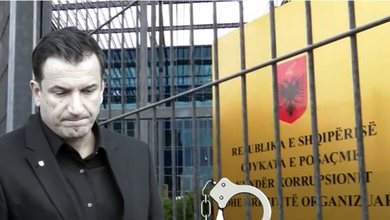




Pending a political decision by the Socialist Party on whether or not to lift Balluk's immunity, legal experts suggest that the Assembly has a limited procedural role – but in no way an obstacle to justice institutions.
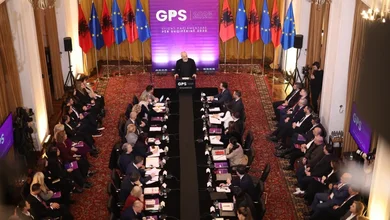
After keeping it on hold for two months, the Council for Regulation, Mandates and Immunity closed on Monday in a single session the review of SPAK's request to lift the immunity of Deputy Prime Minister Belinda Balluku, without a unified position between the parties.
The Socialist Party expressed its opposition to the Democratic Party's stance on lifting immunity, without making it clear what its stance will be on SPAK's request for Balluk.
Accused of the criminal offense of repeatedly violating equality in tenders, Balluku currently only has a travel ban in force. The suspension from office is pending the reasoning and publication of the Constitutional Court's decision in the Official Gazette, while the arrest measure is already awaiting a vote by MPs in early March.
During the closed-door session in the Assembly, SPAK prosecutors argued that the arrest measure was requested due to indications of evidence tampering and witness intimidation. According to what was made public by Democratic MP, Gazmend Bardhi, the prosecutors have alleged that members of Balluk's cabinet and powerful individuals are suspected of being involved in blackmail or offers to buy the silence of witnesses.
The majority's behavior in the "Balluku" case raises questions not only about its will, but also about the constitutional limits of the role of the Assembly when faced with a demand for justice.
Legal experts suggest that the Constitution gives parliament a limited procedural role and no right to assess the merits of the criminal case under consideration. According to them, any parliamentary debate that shifts the focus to the evidence or the merits of the accusation runs counter to parliamentary practice, the constitutional spirit regarding the immunity of deputies, and the recommendations of the Venice Commission.
According to Erida Skëndaj, head of the Albanian Helsinki Committee, Article 73 of the Constitution aims to protect the exercise of the parliamentary mandate and not to create an obstacle to criminal prosecution.
"Limiting immunity, in accordance with constitutional criteria and those provided for in the Criminal Procedure Code, is a necessity for the justice authorities to act without obstacles and delays for a full, independent and efficient investigation against high-level officials for whom there are serious and evidence-based suspicions of corruption and abuse of office," said Skëndaj.
According to her, it remains to be seen what report the Council will propose to the plenary session, but with the parliamentary majority's current stance in favor of Balluk's immunity, she emphasizes that it constitutes an obstacle to the judicial system and weakens the quality of the criminal investigation.
Meanwhile, Skëndaj adds that "the delays created by the Assembly, the positions held by the Prime Minister and the dispute initiated for suspension from office in the Constitutional Court" constitute contradictory positions in relation to previous parliamentary precedents for high-level officials.
According to Skëndaj, the Parliament is not issuing a decision for an arrest measure, but a decision to pave the way for further judicial actions.
"Therefore, the Venice Commission has established standards recommending that such cases not be examined on the merits and that the body that limits immunity should not express whether the allegations raised justify criminal prosecution or not," she emphasizes.
Even for Gentjan Serjanin, lawyer and leader of the organization "For Social Justice", the constitutional provisions clearly suggest that "the legislative power should not become an obstacle to the exercise of the functions of the judicial power, especially when it comes to the investigation of criminal offenses."
“Article 73 of the Constitution aims to guarantee the functional protection of the mandate of the deputy and not to create a barrier against criminal prosecution. In this sense, any interpretation or parliamentary practice that artificially prolongs the procedure or uses immunity as a blocking instrument contradicts the spirit of the Constitution and the principle of separation and balance of powers,” said Serjani.
In this regard, Serjani emphasizes that the Assembly is not competent to examine the issue on its merits, but to undertake a political act and as such, he adds, "it cannot become an obstacle to the work of justice."
On the other hand, the deadlines set in the Assembly's Rules of Procedure for parliamentary procedures for reviewing the prosecution's request, according to Serjani, aim to "guarantee that the Assembly exercises a formal control, and not a judgment on the merits of the criminal case", a competence that belongs exclusively to the judicial bodies. /BIRN