


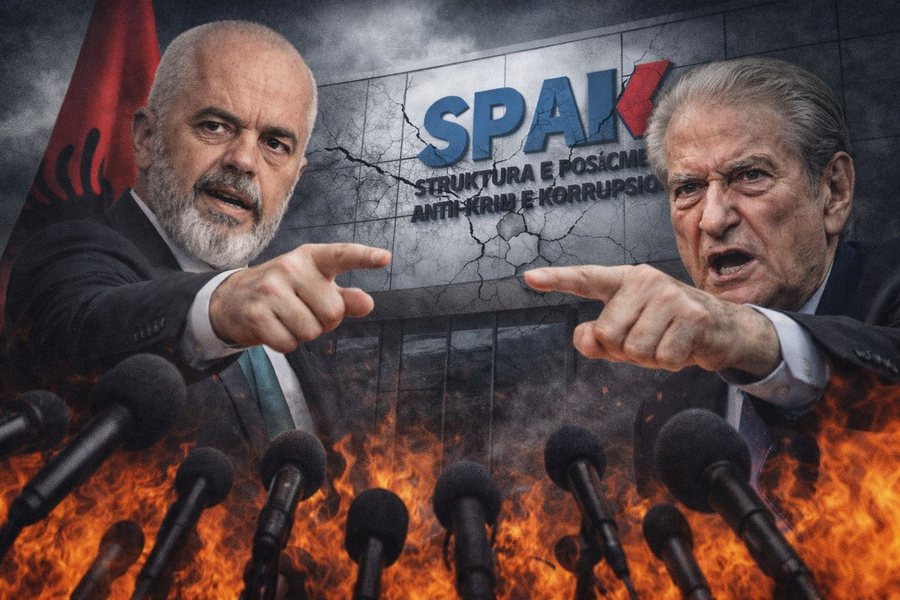
When the government and the opposition speak the same language against justice, it is no longer a political debate. It is an alarm signal. The past Monday showed that the battle against SPAK is no longer taking place behind the scenes, but openly, with synchronized statements and with a clear objective: limiting justice when it approaches power.
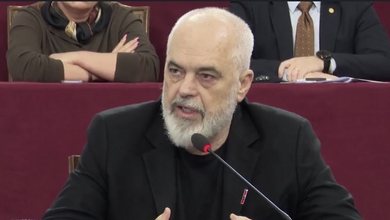
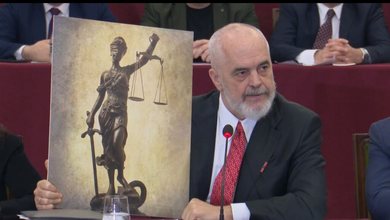
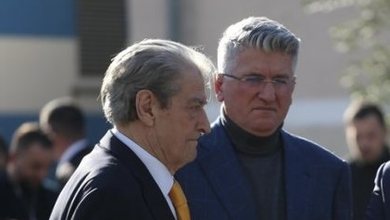
This Monday will long be remembered as the first day of the week that marked the peak of the political attack on the special prosecution. Simultaneously and on schedule, Prime Minister Edi Rama and the leader of the opposition Sali Berisha had taken out of their rich archive of attacks on justice the blackmailing vocabulary against SPAK, which apparently has ruined their humor, peace and the exercise of the right to be their own god and their own stick. One in the government and the other in the opposition.
The chairman of the latter, in his biweekly appearance, continued with the banal jargon of the attack on Altin Dumani, no longer hiding his concern about the wealth investigation for him and his family.
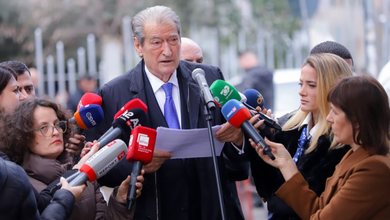
Berisha: "Here you have a list of requests signed by Altin Troplini for all, 16 institutions to investigate Berisha and his nieces and 4 years before their birth. Without any connection, only in search of the implementation of Rama's order. Within one day they have sent an investigation into 16 requests, a 30-year investigation. This has nothing to do with the file, let us emphasize."
Sali Berisha finds it surprising and incomprehensible that his political activity and sources of funding are being investigated. He finds it inexcusable that a prosecutor takes the courage and investigates where a group of people who, without any accomplice with him at the head, went out all over Albania for a year, organized meetings and assemblies worth several million without declaring any expenses. These may indeed be smaller amounts compared to those of government corruption, but if they are smaller, it does not mean that they should remain without investigation.
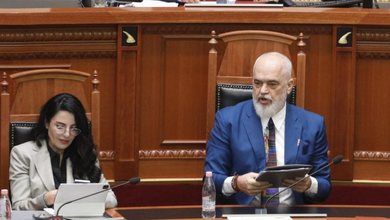
As his counterpart in the government, Edi Rama, declared at the same time: "What makes the suspension by a prosecutor and a judge of a member of the government cabinet scandalous, unjustifiable and unacceptable is the fact that the suspension does not affect the person, but affects the function. Not only is the minister's work suspended, but the work of the institution is suspended. The fact that there is not a single case in Europe where a member of the government has been suspended by a prosecutor and a judge was not enough."
In fact, Edi Rama knows very well that in Europe, an accusation is enough and the institution of resignation works best. Just as an important law of the Criminal Procedure Code cannot be changed within a week with a variant that clearly protects the "mind" of ministers and the prime minister endangered by investigations.
But if ministers are protected, why not protect directors general or heads of ministries? Why should there be immunity from investigation for the minister who heads an institution and not for others? Not to mention the involvement in this project of members of the Constitutional Court, who in fact do not need the immunity of Ulsi's law.
This narrative of Edi Rama and Sali Berisha has only one common denominator: the now unmasked battle against SPAK. This battle, which began quietly with the Xhafaj commission and continued with verbal attacks, has now reached its final point: that of amending the Criminal Procedure Code.
Which on the surface seems to be being opposed by the DP, but which in essence cannot hide the joy of the vast majority of the democratic leadership that SPAK is being shown its place. As the only way for Edi Rama and Sali Berisha to continue to reign in a political scene from which the only factor that can uproot them is justice.
That with its qualities and mistakes, it has shown Albanians some truths, from those that years ago were only spoken in low voices around dinner tables.