


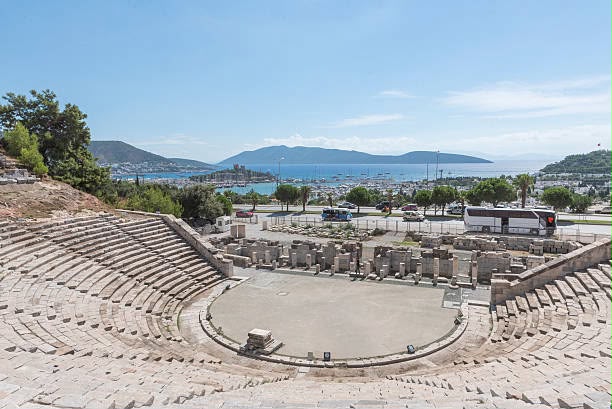
Today, Bodrum is synonymous with luxury beaches, million-dollar yachts, and vacations for the Turkish and international elite. But centuries before it was filled with resorts and marinas, this Aegean city was the scene of one of the most unusual stories of love and power in the ancient world.
Around 350 BC, Halicarnassus – as Bodrum was then called – became the site of the Mausoleum of Halicarnassus, one of the Seven Wonders of the Ancient World. The monument was built by Queen Artemisia II in memory of her husband, Mausolus, who was also her brother. The marriage between sister and brother was intended to preserve power and royal blood within the Hecatomnid dynasty.
When Mausolus died in 353 BC, Artemisia decided to build him the most magnificent tomb the world had ever seen. She gathered the most famous Greek architects and sculptors, who created a gigantic monument decorated with hundreds of sculptures, reliefs, and a magnificent pyramid on top, on which stood a chariot drawn by four horses. So extraordinary was this construction that the name Mausolus became part of history forever: it is from him that the word “mausoleum” comes, which is now used worldwide for monumental tombs.
Legend has it that Artemisia could not bear the loss. According to ancient accounts, she even mixed her husband's ashes with wine and drank it, as a sign of her boundless love. Only two years later, she too passed away.
Today, only ruins remain of this wonder, while many of the sculptures are preserved in the British Museum in London. However, every tourist who visits Bodrum does not just step foot in a famous summer destination, but in the place where one of the most famous and enigmatic monuments in human history was born.