


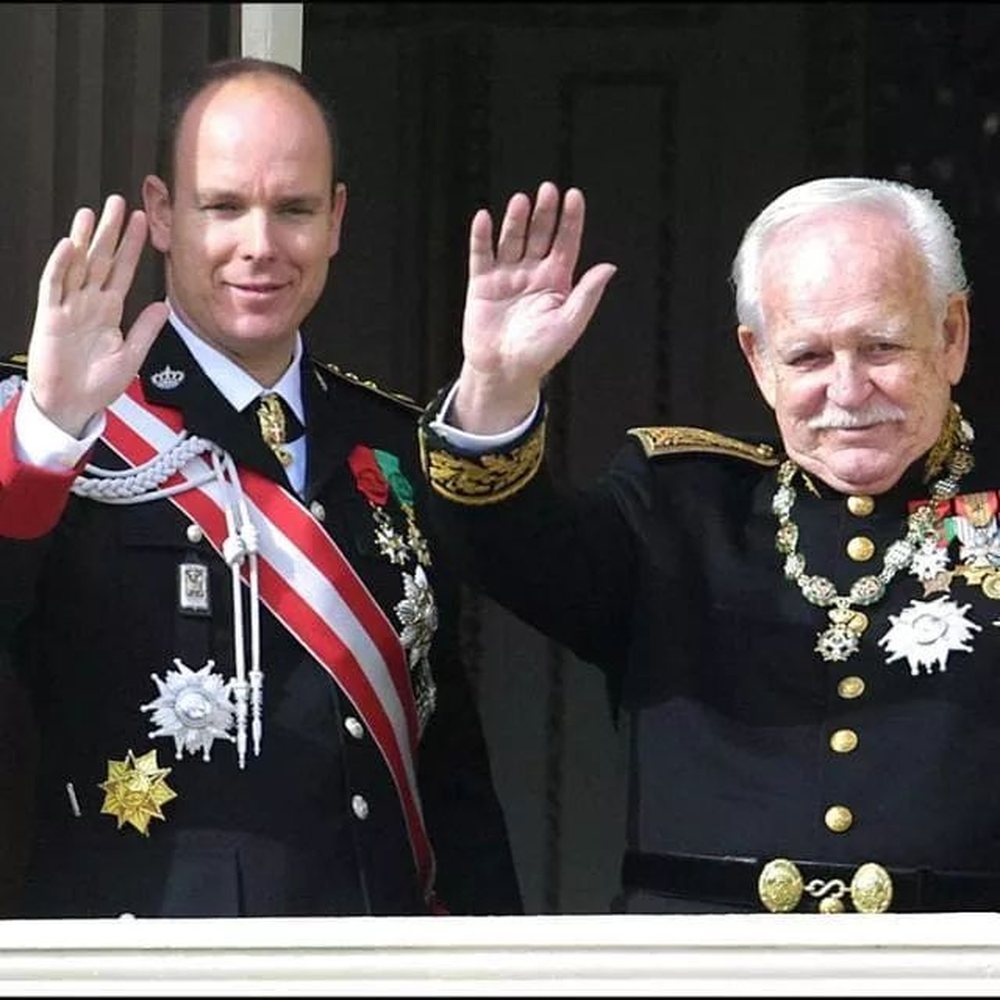
Claude Palmero has been the custodian of the Grimaldi family accounts and the crown's assets for more than twenty years, first with Rainier III and then with Albert II. Dismissed in 2023, the man who is now shaking up the Principality of Monaco is at the center of a long legal battle and publishes the book "Monaco interdit" (editions Nouveau Monde), in which he describes from the inside the power relations that run Monte Carlo, from the real estate oligarchy to the use of "special funds".
"I don't want to take revenge, but to promote the transformation towards a modern state," Palmero, 69, says by phone, recalling that he had believed that Prince Albert would bring the renewal that Monte Carlo needed.
When did you change your mind?
"Albert's coronation in 2005 had raised many hopes, not just for me. I began to understand that he did not really want to be a reforming prince between 2012 and 2013, when discussions began about expanding the principality into the sea. Albert avoided conflict with the oligarchy of builders in order not to face problems and to continue dedicating himself to the things he likes most: sports, parties and women."
In the book he mentions Patrice Pastor as the center of gravity of real estate power in Monte Carlo.
"The Principality of Monaco is a wealthy micro-state, with a balanced budget, but much less powerful than the real estate promoters, especially Patrice Pastor. I had proposed to the prince measures to change the balance in favor of the state, for example the creation of a public company to exploit state properties. From that moment on, I fell into disfavor until my expulsion."
What other missions had Prince Albert entrusted to him?
"I managed the 'fonds à destination spéciale', funds from which the prince drew at will. I mentioned the case of the 90 thousand euros paid to buy compromising photos. Earlier, in 2003, when the illegitimate son Alexandre was born from the relationship with Nicola Coste, my mission was to ensure that the news remained secret. Another time the prince asked me to find an apartment with maximum discretion. I found it and, to guarantee even more privacy, I rented it in my name."
After publishing these private elements in the book? Many say he is driven by revenge.
"I do not want to take revenge, but to provoke a reaction among the Monegasques. It is time to abandon the culture of darkness and lies, to create a modern state with justice and independent media. However, I have not revealed even a quarter of what I know. I have limited myself to defending myself when I was accused of using special funds or the apartment rented in my name."
The book also dedicates a chapter to Charlène, described as a "sad princess." Had he known her closely?
"Not much, she has always led a withdrawn life. I have dealt with the marriage contract and I can deny the rumors of an attempted escape before the wedding. If Charlène had wanted to leave by helicopter or plane, she would have been stopped on the runway in Nice and forced to return for the wedding. Fortunately, lately, she seems calmer and more liberated."
For Caroline he talks about rivalry with his brother and a system of influence through the Casiraghi children.
"Caroline is intelligent, charismatic and ambitious. This combination made her never accept that her brother should rule. She considered herself more worthy. And she knew that Rainier had seriously considered putting her in Albert's place. Today, as far as I know, she has shifted this ambition to her children."
What was the “Monaco Intelligence Service”?
"Here we enter the parody. The prince wanted exclusive information on certain people and created the Monaco Intelligence Service, entrusting it to a tabloid journalist, Robert Eringer, who claimed to have worked for the CIA. He turned out to be a non-serious character and even the prince himself realized this in the end."
The principality accuses him of abuse of power and betrayal of trust.
"The legal battle is still ongoing. For three years there have been many denunciations and investigations, without ever reaching trial. The only official accusation came on January 30 for keeping documents of investigative secrecy. During a search of my home they found minutes that the prince himself had given me. They accuse me because Albert enjoys immunity. It is an accusation that does not bother me much."
Do you still live in Monte Carlo?
"Yes, of course. I walk the streets with my head held high. I have no reason to leave."
Why won't the book be sold in the principality?
"It seems to me to be another proof of omerta. I know that Italians understand this term. In Monte Carlo there is an omertà where justice is complicit."