


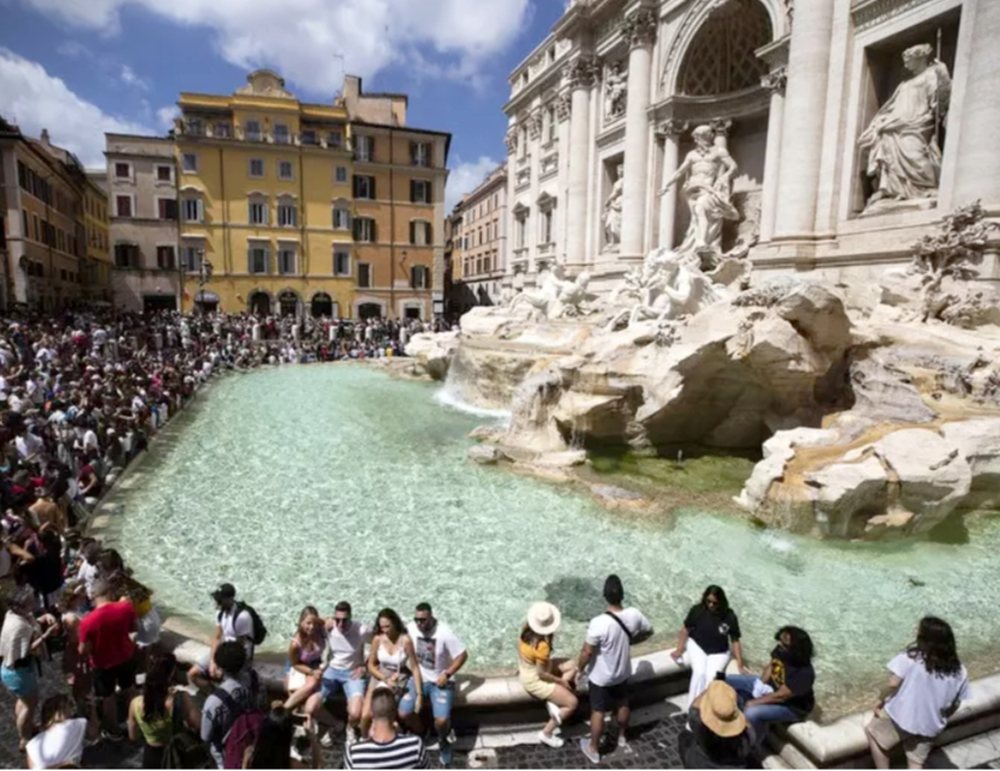
Starting today, the City of Rome (Campidoglio) is introducing a new charging system for the Trevi Fountain: 2 euros for controlled entry to the area in front of the fountain basin, one of the most recognizable symbols of the Italian capital.
Tickets will be required:
Monday to Friday, from 11:30 to 22:00
on weekends, from 9:00 AM to 10:00 PM, with last entry at 9:00 PM
For the first day of implementation of the measure only, the hours will be from 9:00 to 22:00, Campidoglio announced.
Entrance will remain free for residents of Rome and the Metropolitan City, upon presentation of an identity document, as well as for people with disabilities and their companions, children under 6 years old and tourist guides.
The fountain, commissioned by Pope Clement XII and designed by architect Nicola Salvi, will still be open to the public for free after 10 p.m. The decision comes after a year-long test period, during which over 10 million visitors were registered, with an average of 30,000 entries per day and a peak of up to 70,000.
The new ticket system will not be limited to the Trevi Fountain. From February 3, paid admission will also apply to five monumental and museum sites that were previously free: Villa di Massenzio, Napoleonic Museum, Giovanni Barracco Museum of Ancient Sculpture, Carlo Bilotti Museum and Pietro Canonica Museum, with a fee of 5 euros. Meanwhile, the Capitoline museums and sites will continue to be free for residents and students living or studying in Rome and the province.
The decision has sparked criticism. According to Rachele Mussolini, president of the Forza Italia group in the Campidoglio, “charging entry to the Trevi Fountain for non-residents is not only illogical, but also in complete contradiction with the policies of other major European capitals.” Even more critical is the Assoturismo of Rome and Lazio, which calls the measure “a provincial approach that turns into a commodity even what should not be commercialized.”
For its part, the Municipality explains that in parallel with the new system, interventions have also been launched in the enclosure, with the aim of protecting the lower area of the fountain and managing the flow of visitors from Via della Stamperia. The installations, it is emphasized, are fully reversible.