After weeks of vacillating between different explanations for war against Iran, Donald Trump's administration now appears to be focused on a clear objective: regime change in Tehran.
The US-Israeli strategy aims to weaken Iran to the point of turning it into a failed state. Trump himself has stated that at some point the United States could “go in and clean everything up,” leaving the country with “good leaders.” According to him, the selection of these leaders should also be done by the United States.
The model that seems to inspire Trump is not the failed regime change in Venezuela, but the example of Syria, where after a long civil war the state was weakened and then a new leadership was created that is seen as more friendly to the West.
However, recent developments show that Iran has no intention of surrendering.
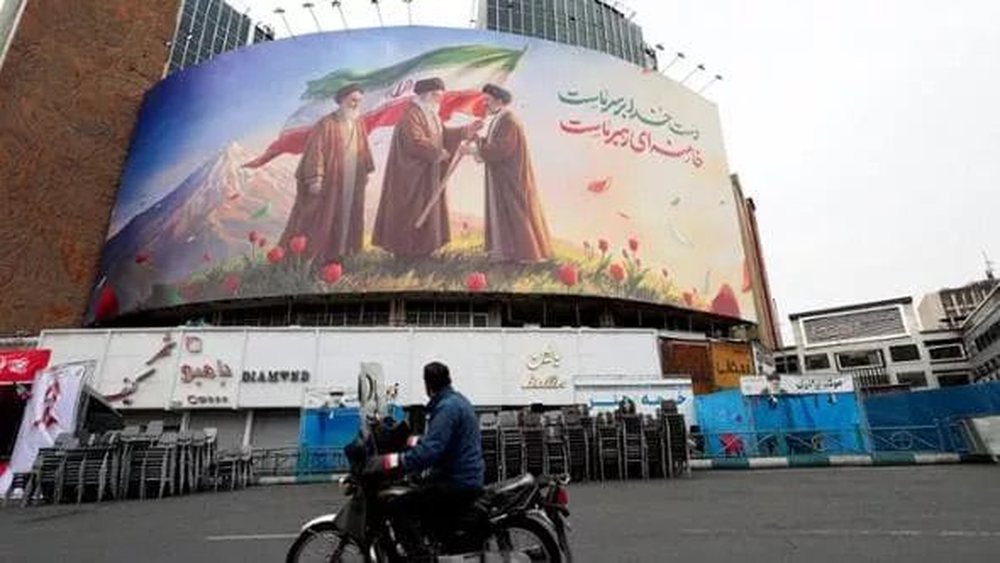
On Sunday, Tehran elected as its new supreme leader Mojtaba Khamenei, the son of Ali Khamenei, who was killed in Israeli airstrikes at the start of the war.
The election of Mojtaba Khamenei was interpreted as a clear signal that the Islamic Republic intends to continue the resistance and maintain the continuity of the regime.
He is considered a powerful figure in the Iranian establishment, closely linked to the main power structures and the Islamic Revolutionary Guard Corps. Before becoming a religious figure, he served during the Iran-Iraq war in the 1980s and maintained strong ties to the country's military apparatus.
For decades, Mojtaba Khamenei has been one of his father's closest advisors and has played a key role in managing the balance of power within the Islamic republic. However, he has largely remained behind the scenes and the Iranian public knows relatively little about him.
His election shows that Iran has decided to close ranks, choosing a figure who represents the continuity of the system rather than a change in it.
Analysts warn that the American strategy could produce an effect opposite to that intended.
Rather than bombing and military pressure inciting a revolt against the regime, they could strengthen a sense of Iranian nationalism and unite the population against an external threat.
Although many Iranians have strongly criticized the regime in recent years, the fear of the country's destruction and the possibility of territorial dismemberment may push many citizens to line up in defense of the state.
There is also concern that American and Israeli support for separatist groups, such as the Kurds or the Azerbaijani and Baluchi communities, could jeopardize Iran's territorial integrity.
In this context, protests that were once directed against the regime can be transformed into manifestations of a national resistance against foreign intervention.
Iran's history reinforces this possibility.
Since the 16th century, Iranian nationalism has been shaped by confronting external threats and attempts by great powers to dominate or divide the country.
Iran has survived conflicts with the Ottoman Empire, Russia and Britain, as well as occupation and the threat of partition during two world wars.
This nationalism is built on Persian language and culture, intertwined with Shiite tradition, and has often served as a unifying factor in moments of crisis.
If Iranians manage to see this war as an attack on Iran itself – and not just the regime – then Iranian nationalism can be mobilized in the service of the resistance.
In such a scenario, the strategy of regime change through bombing of infrastructure and state institutions may fail.
According to analysts, toppling the Iranian regime would take much more than an air campaign: it would require invasion and a long war on the ground.
Such a conflict could last much longer than not only American public opinion, but also the Iranian population itself, is willing to tolerate.