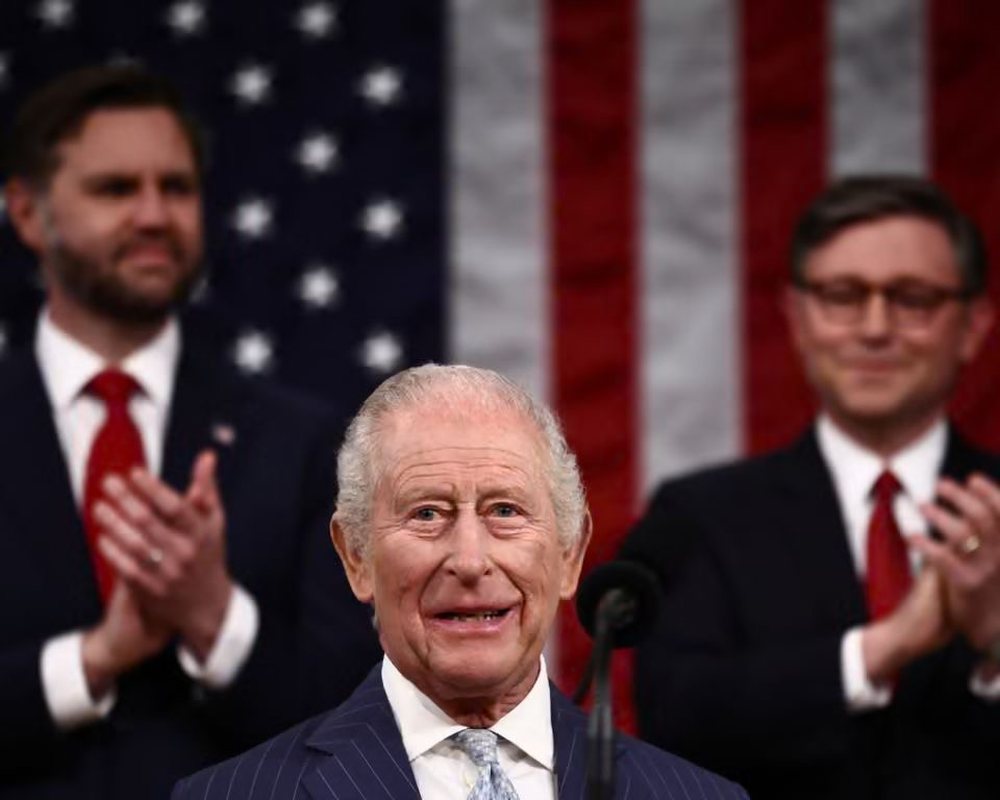
The king's carefully prepared speech to the US Congress was the result of close collaboration with advisers, Downing Street and the British Foreign Office.
Caroline Davies
April 29, 2026
Donald Trump called it "fantastic," Democrats applauded the references to Magna Carta, and a joint session of the US Congress rose to its feet to greet it with a standing ovation.
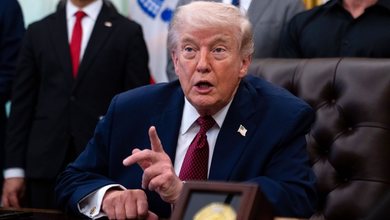
King Charles' speech to US lawmakers, while nonpartisan, did not shy away from politics. And while the president was not offended – "He gave a brilliant speech, I was even a little jealous" – its direct references to topics the US president has previously criticized did not go unnoticed in the US.
“Beneath King Charles’s humor and ethics, there were some subtle objections to Trump,” the Washington Post headlined; while the New York Times wrote: “King Charles seeks control over executive power.”
The fact that Charles' speech was so elaborate and delivered with warmth was in itself almost "an implicit rebuke to the president's own vague and uncontrolled public statements," said Professor Philip Murphy, director of history and politics at the University of London.
With the "special" relationship between the UK and the US now significantly strained, much depended on this speech - King Charles' most important so far in his reign.
The speech highlighted the importance of NATO, called for continued support for Ukraine and warned of the dangers of isolationism. References to the Magna Carta and the principle that executive power should be subject to checks and balances were met with loud applause from Democrats. There was also a pointed mention of “my prime minister,” Keir Starmer, whom the president has publicly insulted, as well as the king’s love of the Royal Navy, which Trump has previously mocked.
“It is hard to imagine that he could have gone much further with what he said and what he did not say,” said contemporary political historian Anthony Seldon, calling the speech “extraordinary.” “He judged the situation brilliantly: very brave, very clever and very wise.”
Such speeches are the result of teamwork. Good speechwriters know very well the character of the person they are writing about.
Charles's top aide, private secretary Sir Clive Alderton, is ideally placed to make a key contribution. As the main person for relations with Downing Street, an experienced diplomat and former ambassador who knows the Foreign Office well, he has served Charles both as Prince of Wales and now as King, and has worked closely with the British government and diplomacy.
A first draft of the speech set out the government's, diplomatic and commercial objectives, as well as the main points the monarch wanted to make. Buckingham Palace, Downing Street and the Foreign Office were fully coordinated – it could not have been otherwise.
The king's deputy private secretary, Theo Rycroft, a diplomat who has served in British diplomacy since 2009, and the king's director of communications, Tobyn Andreae, are also likely to have contributed. In the US, British ambassador Christian Turner and his deputy James Roscoe, a diplomat and former communications secretary to Queen Elizabeth II, have also discreetly conveyed the White House's views.
Drafts of the speech were exchanged repeatedly to check tone, balance and any last-minute issues that might arise. According to sources, work on improving this politically weighty speech continued until the morning of the day it was delivered to Congress.
Throughout the process, the king himself has played a major role in refining the speech. He makes handwritten notes in red ink on printed drafts, writing comments in the margins, adding new parts and removing others. He has also held meetings with Alderton on this issue.
Charles is said to have a knack for humor and doesn't need a special joke writer. There were plenty of them in the speech, which helped to lighten the strong political message. However, it is still unclear who came up with the idea of giving the president a bell from HMS Trump, a T-class submarine launched in 1944.
The result was a speech that was liked by a large part of the American political class, even if not by the Trump administration, according to Murphy.
But its impact shouldn’t be judged immediately. “Trump will still be Trump on Monday,” Seldon said. “But the impact of this speech should be seen in the long term: how Republicans and Democrats will react; how they will view NATO; how they will view the war in Ukraine; how they will view America’s unilateral behavior; and how they will view executive power in the hands of one person — who is taking more power than the founding fathers intended when they created the separation of powers.”