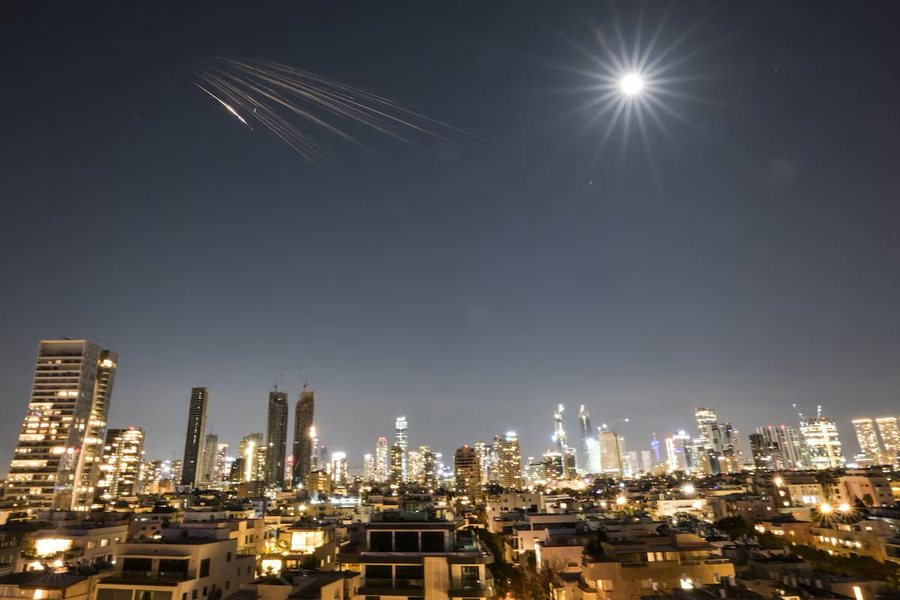
Israel hit Beirut with high intensity on Friday, after ordering an unprecedented evacuation of the entire southern suburbs of the Lebanese capital, marking a major expansion of the war against Iran that began a week ago together with the United States.
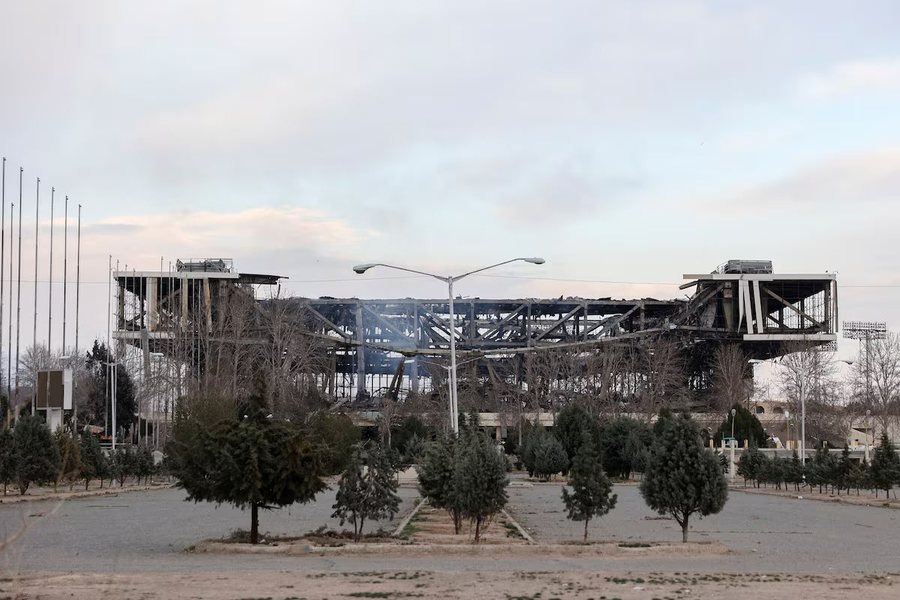
At the same time, Israel launched a new wave of attacks on Iran. The Israeli military said that about 50 warplanes struck a bunker under the compound in Tehran belonging to slain Supreme Leader Ali Khamenei, which it said continued to be used by Iranian leaders even after his assassination on the first day of the war.
Meanwhile, in one of the first signals that could indicate diplomatic efforts to stop the conflict, Iranian President Masoud Pezeshkian stated that several countries have launched mediation efforts.
"Mediation efforts have begun in some countries," he wrote on the social network X, without giving details of which countries are involved.
He added that Iran is committed to lasting peace in the region, but will not hesitate to defend the country's sovereignty and dignity.
In the Iranian political system, the president is under the authority of the supreme leader, but currently Pezeshkian is part of a panel that has temporarily taken over Khamenei's functions.
Meanwhile, US President Donald Trump has gone further in his statements, demanding that the United States have a role in selecting the successor to the Iranian supreme leader.
Israel expands bombing in Lebanon
Israel has also expanded its attacks into Lebanon, aiming to hit Hezbollah, the Shiite militia linked to Iran and one of the most powerful political and military forces in the country since the 1980s.
Hezbollah had fired rockets at Israel this week, declaring it was an act of revenge for the assassination of Khamenei.
Multiple explosions lit up the night sky over Beirut's southern suburbs. The Israeli military said it carried out 26 waves of bombing overnight, hitting Hezbollah command centers and weapons depots.
Residents of the area tell of a chaotic situation and a forced exodus from their neighborhoods.
“We are sleeping on the streets – some in cars, some on the sidewalk, some on the beach,” said Jamal Seifeddin, 43, who fled Beirut’s southern suburbs and spent the night in the city center.
“I have never slept on the ground like this. I was forced. No one even brought a blanket.”
Mass evacuation in Beirut
Israel ordered residents to evacuate the entire southern area of Beirut, where hundreds of thousands of people live.
In previous military operations, the Israeli army had only ordered evacuations limited to specific neighborhoods. This time the order includes the entire southern outskirts of the capital, an area considered a Hezbollah stronghold.
Israel has intervened in Lebanon several times in recent decades. The last military campaign in 2024 significantly weakened Hezbollah, but the intensity of the recent bombings in Beirut is considered by analysts to be one of the most severe episodes in the history of the conflict in the Lebanese capital.