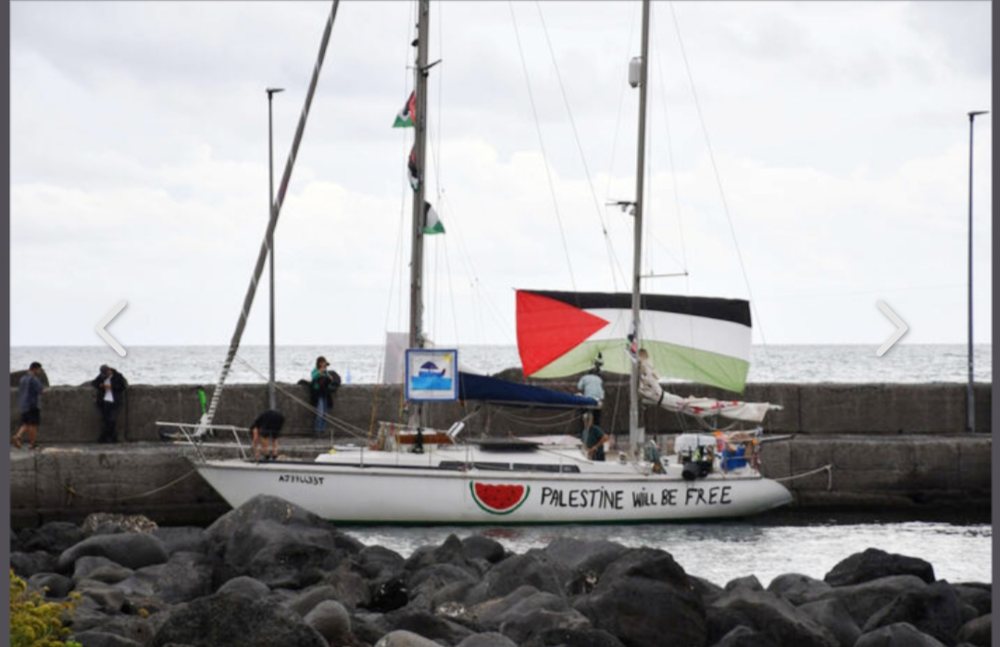
The ships depart from Crete again and are now fewer than fifty-one: the Sumud flotilla continues forward, despite several departures, and for the moment the destination remains the same – the Gaza Strip is in sight.
However, mediation contacts are intensifying. The spokesperson for the Italian delegation of the Global Movement for Gaza, Maria Elena Delia, has just returned and spoke by phone with Foreign Minister Antonio Tajani, opening up new possibilities to avoid the risk of a clash with Israeli authorities at sea. However, it is clear that even Frontex will not guarantee the safety of the activists, as the European border control agency itself has announced.
For the Italian government, the main option on the table remains the intervention of the Latin Patriarchate of Jerusalem, which foresees the arrival of the flotilla in Cyprus, from where the patriarch Pierbattista Pizzaballa himself would guarantee the transfer of food cargo to Gaza via the port of Ashdod in Israel, and then through the humanitarian corridor opened by the Misericordie Amalthea organization. At the moment it seems difficult for this proposal to be accepted, as it is, by the Flotilla. Spokeswoman Delia, who has expressed a greater inclination for mediation, even after the calls of the President of the Republic Mattarella, hopes that “a solution will be found as soon as possible that takes into account both the grave humanitarian emergency and the need to restore international legality.”
Foreign Minister Tajani has also maintained an open stance for dialogue, but warns: "We have shown what the risks and consequences are. As long as we can do something to avoid risks for Italian citizens, we will do it. If they then enter (the blockaded area), we will help them there. But the military ship will not accompany them, that is the only sure thing," said Tajani, referring to the drone attacks that the flotilla received in international waters a few days ago and the risk of other, more severe and dangerous attacks. After that incident, Defense Minister Guido Crosetto ordered the dispatch of a Navy ship that is following the flotilla from a distance for emergency assistance.
An alternative route, which seems to be gaining more support from activists, is the possibility of reaching Egypt, passing through Israeli territorial waters, thus reaching the shore near Gaza. The aid would be unloaded and transported by trucks to Gaza, with the help of organizations already present in the Palestinian territory. This would require a temporary opening of one of the humanitarian corridors through the Rafah crossing.
"If this were to happen, it would be something revolutionary," commented one of the crew members.
As a last resort, the possibility of a "maritime filter" is mentioned, with ships from various European countries stationed in front of Israeli waters, to stop the Flotilla's progress - but this is considered a distant and very dangerous scenario, due to the possibility of collisions.
Frontex, responding to requests from several MEPs who had written to Ursula von der Leyen requesting her intervention, clarified:
"We are a European border control agency, a civilian organization, not a military one. We have no ability to provide protection or escort."
"I advised against breaking the blockade, it is dangerous," Deputy Prime Minister Antonio Tajani said on Rete4's "4 di Sera Weekend" show, speaking about the call with Delia. He added that the government will continue to ask Israel to protect the people on board.
Meanwhile, the Flotilla has set off again, moving south, to avoid a storm east of Crete.
"Despite the sabotage, the mission continues. The Italian delegation on board consists of about 50 people," – the activists emphasize – “of whom about forty have remained on board, while the others have legitimately decided to return to Italy to continue the activity together with the crew on the ground.”/ANSA