Mojtaba Khamenei, the shadowy prince who became Ayatollah! The successor to the leadership of Iran's obscurantist regime is physiognomically and in dress indistinguishable from his strict Muslim environment. His figure, identical to that of his predecessor, the country's supreme religious leader for 37 years. And not only because he is his son, Mojtaba Hosseini Khamenei is first and foremost another hardline mullah and, moreover, the corrupt heir to his terrible tyrannical father, writes protothema.
In its analysis, the Greek media continues; “In the theater of Islamic power, there is always an invisible stage behind the political stage. There, a shadow appears as if in front of the body, around it presidents change. Elections come and go and voters pass by sighing. The authoritarian figure of the Ayatollah remains motionless behind the curtain. Enshrined on a theocratic throne, his name is praised in mosques where men and women pray separately.
However, as much as the targeted assassination of Ali Khamenei was a relief for oppressed Iranian society, it was equally shocking for the terrorist regime.
The tension that his assassination opened in the internal balance of Iranian power needed to be urgently closed.
Amid the stormy American-Israeli attacks, the 88 senior Shiite clerics elected for an eight-year term who make up the "Assembly of Experts" were urgently summoned to make a quick decision.
Necessary to project the unity of the regime, to show control over its mechanisms, and to demonstrate determination in critical war situations.
Their body's sole constitutional responsibility is to elect, appoint and oversee the country's supreme leader. In the 47 years of the Islamic Republic, it was only the second time it had convened for this purpose.
The "wise men," who are more fanatical ultraconservative "hawks" than theological "doves" as initially thought, held online discussions in a climate of intense fear and terrifying disorientation.
They tried and failed to reach an agreement, until the next day two-thirds of the body – to constitute a quorum – that is, about 60 of them, met in person. They reviewed the criteria for the new future supreme religious leader, who is also the head of the armed forces and the intelligence services.
His qualifications included leadership skills and political experience, a deep knowledge of Islamic law, and revolutionary legitimacy.
In reality, they would have to invent him, artificially attributing such gifts to him. As, in the end, they did.
They overwhelmingly proclaimed the second son of the six children of the assassinated previous leader as the new leader, essentially ignoring the rebukes of Ali Khamenei, who ruled out any scenario of his family succession from 2024.
His election did not stem from religious consistency or a high level of expertise in Islamic theology. He merely holds the rank of “Hojatoleslam,” a mid-level clerical position. However, he was considered sufficient to become an Ayatollah.
He had all the guarantees that came with an environment of favoritism. He was the “son of a god,” the “shadow prince of a rotten kingdom,” the administrator of his family’s ever-growing stolen wealth and shady business interests.
The brutal dynastic regime and its branches recognized themselves in him. In his zealous identity, they embraced the guarantor of their survival.
In the catastrophic conditions of an ongoing war, they declared it the embodied definition of absolute jihad.
Of the vengeful “holy war” and the legalization of armed violence against infidels. He had, after all, suffered traumatic personal losses. In lighter circumstances, he would have been a tragically embittered, mourning figure. In the savage circumstances of the bombing of the country, the shield of the invincible hero was reserved for him.
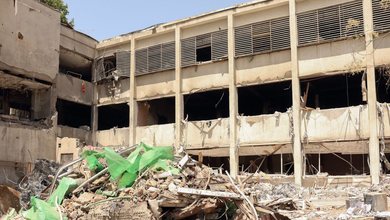
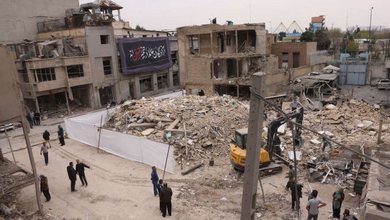
In the devastating US-Israeli airstrike last Saturday on the Ekhtesashi Palace in Tehran, their relatives were killed instantly. Among the victims were his father, his mother Mansoureh Hojasateh Bagherzadeh, his wife Zahra Adel and one of his two sons. He is also believed to have been wounded in the attack. Iranian state television called him “Jaanbaz (ed.: wounded) of Ramadan,” without specifying whether he was wounded in the same place or by another strike in a different location.
However, for the regime’s diehard loyalists, this automatically symbolized its designation as a ruthless punisher of the guilty. By those dogmatically committed to the hierarchical power structure, it was interpreted that the war would not end until the US and Israel “repented for their actions.”