


“The AI race is not won by the most powerful model, but by the one that brings the most benefits to society.”
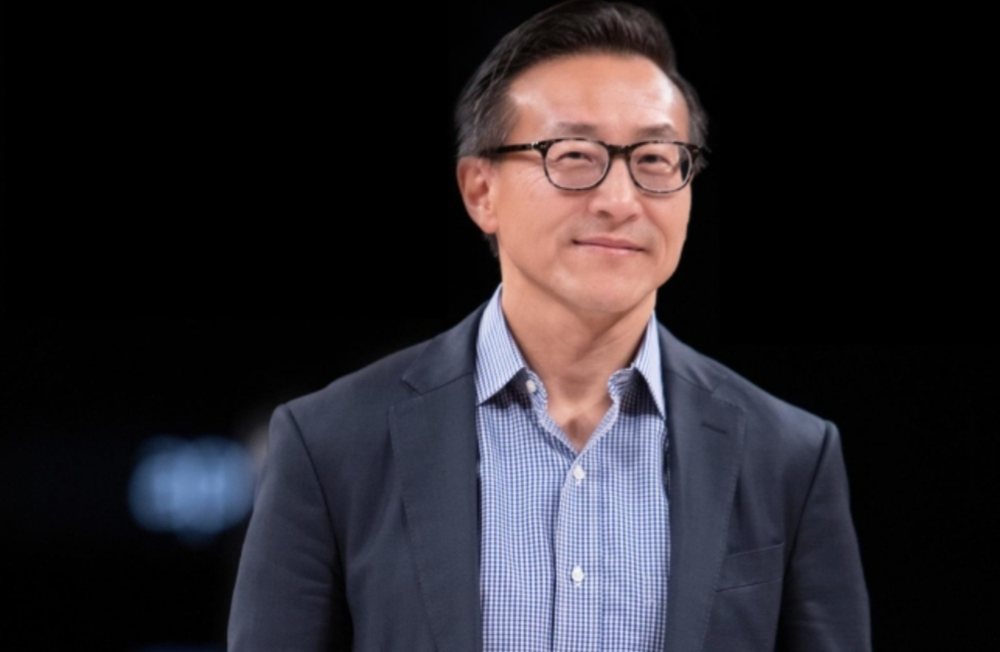
With this clear message and against the flow of global rhetoric for technological dominance, Joe Tsai, president of Alibaba Group, places the emphasis not on the brute power of algorithms, but on the real impact on people's lives. At a time when artificial intelligence is treated as a new geopolitical weapon and a prestige contest between superpowers, Tsai proposes a different standard of measurement: social utility.
In Milan, during a meeting where he recalled the beginnings of the company he founded in 1999 with Jack Ma, he confessed the decision that changed his life: he left a salary of $700,000 a year to follow Jack Ma's vision and accepted only $50 a month. A personal gamble that today translates into one of the largest technology empires in the world — and into a voice that calls for more cooperation than confrontation in the age of AI.
Amid US-China tensions, chip restrictions and occasional accusations from the Pentagon, Tsai defends a simple but challenging idea: globalization and cooperation are more effective than isolation. Because, according to him, the future of artificial intelligence will not be decided by who has the biggest model — but by who manages to turn the technology into concrete progress for society.
Interview for Italian media
Shortly before the interview, the Pentagon briefly included Alibaba, along with BYD and Baidu, on a list of companies allegedly helping the Chinese military. The document was withdrawn without explanation, but it was enough to rattle markets and raise questions about a possible visit by Donald Trump to China.
Alibaba responded by denying any military connection and warned of legal action.
"Globalization brings efficiency"
When asked about the technological "decoupling" between China and the West, Tsai is clear:
“Globalization brings efficiency. Especially for artificial intelligence, countries need to cooperate. AI can solve giant problems. The race is not who has the most powerful model – but how much benefit AI brings to society.”
With a biography that spans China, Taiwan, Canada and the US, he sees himself as a bridge between East and West: “Universal values like honesty and loyalty are shared, regardless of politics.”
Alibaba's technology at the Olympics
The company's technology is at the heart of the Milano-Cortina 2026 Winter Olympics.
Thanks to AI and the cloud, broadcasts have changed radically: 360-degree views, isolation of athletes from the background, and real-time editing via the cloud. Tsai emphasizes that the real revolution is in efficiency and sustainability: fewer broadcast trucks, less physical equipment, and fewer staff in the field.
AI and the future: collaboration, not competition
When mentioned the statement by Jensen Huang, CEO of Nvidia, that China could win the AI race, Tsai responds:
"What is the prize? There is no real competition for the most powerful model. Victory is measured by the impact on society."
He adds that in China AI is already integrated into everyday life: shopping, maps, deliveries.
Open source and Qwen models
Alibaba is investing in open source models like Qwen.
According to Tsai, this is both a philosophical choice and a business strategy. Open source allows for wider distribution and protects companies' privacy, while monetization is done through Alibaba Cloud's infrastructure.
Will AI replace humans?
Currently, about 30% of Alibaba's code is written by AI. But Tsai emphasizes that senior engineers and strategic planners will remain indispensable:
“AI can prepare a draft, but a human understands the nuances.”
He doesn't believe AI will replace human experience: "No machine can replicate the emotions and experience of a parent."
US restrictions on chips
As for US restrictions on the export of advanced chips, Tsai says the company is adapting by using alternatives and developing its own inference chips. The restrictions, he says, have spurred greater creativity in software optimization.
Italy, fashion and investments
Alibaba helps Italian companies sell in China, with around 6 billion euros of Italian products exported through the platform – mainly fashion.
Tsai's family office has also invested in Golden Goose, emphasizing the value of Italian design: "You don't just create products, you create fashion objects."
Is AI a bubble?
For Tsai, the answer is clear:
"Absolutely not. Artificial intelligence is real and it is here to stay."
In his vision, within five years we will have a single AI interface: we will speak to the phone to order coffee or buy a gift, and the system will do it itself, recognizing our preferences.
For Tsai, the future of AI is not a matter of dominance, but of impact – not who wins the race, but who improves people's lives./Corriere della Sera