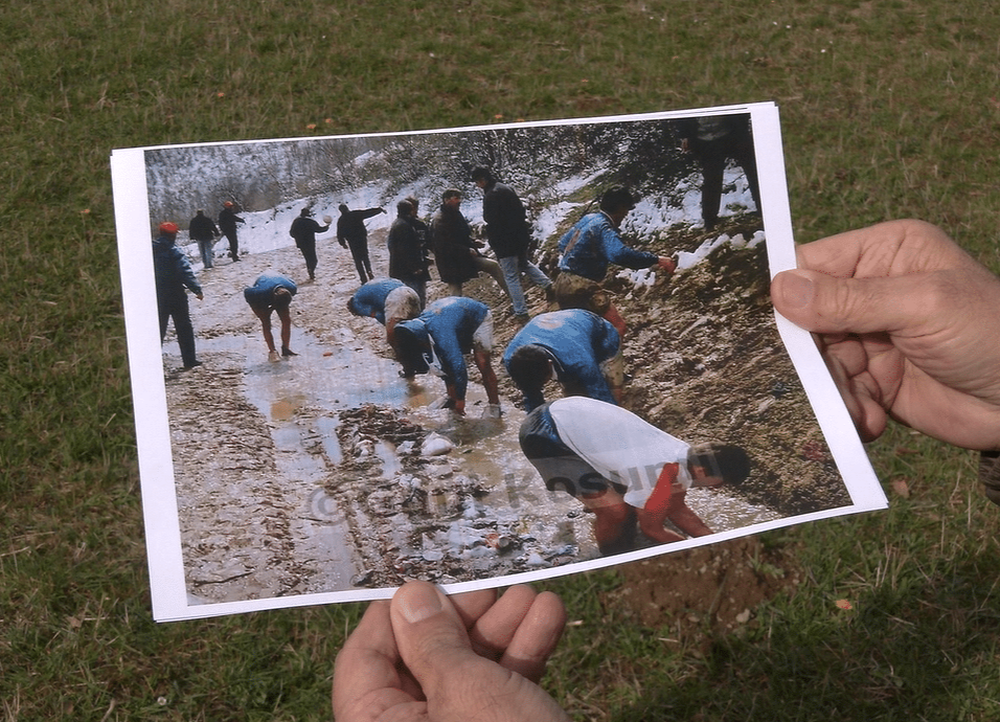
On a cold day in late March 1997, sports journalist Gani Kosumi was watching a match on an improvised soccer field in a forest.
“Many matches have been played on this field and I have many good and bitter memories from here,” Kosumi told BIRN at the football field in Llukar, a village about eight kilometers east of Pristina.
The place has transformed over the decades. But back then, conditions were very basic. Kosumi took a photo of players washing off the mud from the match in a stream near the pitch.
“I saw players trying to wash the mud off their bodies with stream water and then getting into their cars to go home. There were no changing rooms,” he recalls.
"It was very cold. You can see the snow in the photo. These were the conditions back then. Winters were colder," he adds.
It's a powerful image that shows how far Kosovo football has come since then; the national team is now close to qualifying for the 2026 World Cup.
A long battle for international recognition
The 1997 match in Llukar was a match in Kosovo's top league at the time. Kosumi, now 70, remembers only one of the teams playing.
"It was Llapi. I don't remember the opponent in that match," he says.
“I only had three frames left on the film and I decided to capture that moment. I think it was a detail worth documenting, to show that Kosovo footballers have spared no effort to achieve membership in UEFA and FIFA,” adds Kosumi.
When Yugoslavia was breaking up in the early 1990s, Albanian sports teams in Serb-administered Kosovo were banned from playing in official stadiums and fields. Albanian teams were forced to play matches in makeshift venues.
Nearly three decades later, the national team is close to making history – just one victory away from securing a historic spot at the World Cup.
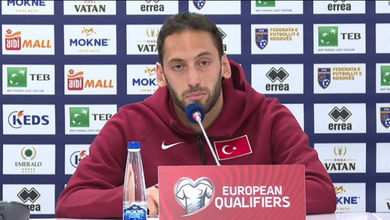
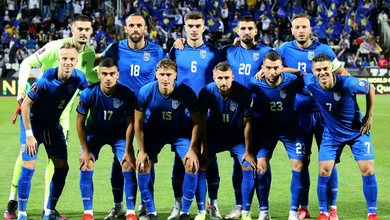
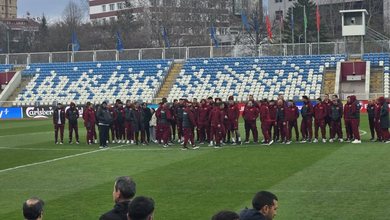
On Tuesday evening, at the Fadil Vokrri Stadium in Pristina, Kosovo will face Turkey for a spot in the tournament that will take place this summer in the United States, Canada and Mexico. If they win, Kosovo will be placed in Group D along with the United States, Paraguay and Australia.
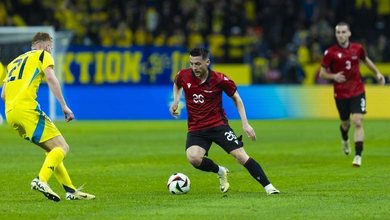
Hopes were raised last Thursday when Kosovo defeated Slovakia 4-3 away in the second round of qualifiers, in a match where they needed to recover from a disadvantage.
It now faces Turkey, ranked 25th in the world according to FIFA, while Kosovo is ranked 78th.
“It’s a match of extraordinary importance,” says Kosumi. “The Kosovo national team has achieved the greatest success in its history. It’s an important match for both teams, but I think Kosovo will win.”
Kosumi, who retired in 2020 after 40 years of journalism, worked at Radio Television of Pristina until July 1990, when Slobodan Milošević's regime in Belgrade massively laid off Kosovo Albanian employees.
He later worked as a sports correspondent for Albanian Public Television and, after the end of the war in Kosovo in 1999, worked for Radio Television of Kosovo until his retirement.
“I got a camera from my brother who lives in the UK and started taking pictures, becoming more and more interested in photography,” he recalls.
"In the last five years I have worked hard to classify my photographs. There are about 500 thousand of them, taken since 1990."
Unwavering
Over nearly three decades, the Kosovo national team has followed a long and difficult path to international acceptance. It gained full membership in FIFA and UEFA in 2016.
Until then, Kosovo's teams could not compete on the international stage. Two years before accession, FIFA allowed Kosovo to play only friendly matches under special conditions.
In the first qualifiers for the World Cup in Russia in 2018, Kosovo finished bottom of the group with only one draw in 10 matches.
Nearly ten years after leading Kosovo to its first official match against Finland in September 2016, coach Albert Bunjaki says the growth of the national team is “the merit of all generations of players and coaches who have worked over the years.”
"Kosovo is a tactically mature team, there are different dimensions in the game and young players are growing and maturing," he told T7 television in Pristina.
"I see it as a 50-50 match against Turkey. It's an emotional game and the energy has to be kept under control. Turkey has a very respected and creative national team," he warned.
But he added that, playing at home, Kosovo has a "real chance" of winning.
"So far, our national team has shown that it has a big heart. The victory over Slovakia was a surprise for me. We have a very solid team that plays well against strong national teams," he said.
Although Kosovo's 78th-place ranking places them in the weakest position on paper, Kosovo striker Fisnik Asllani, 23, who plays for Hoffenheim in the Bundesliga, says that doesn't really matter.
"I don't care who the favorite is and I don't think the team cares either. They could be favorites, as was the case with Slovakia and Sweden. We are here to do our job and we will give our best on the field," said Asllani.
"The atmosphere in the team is very good and the victory over Slovakia has given us confidence. We will have the fans around us and I hope we win and go to the World Cup," he concluded./BIRN