


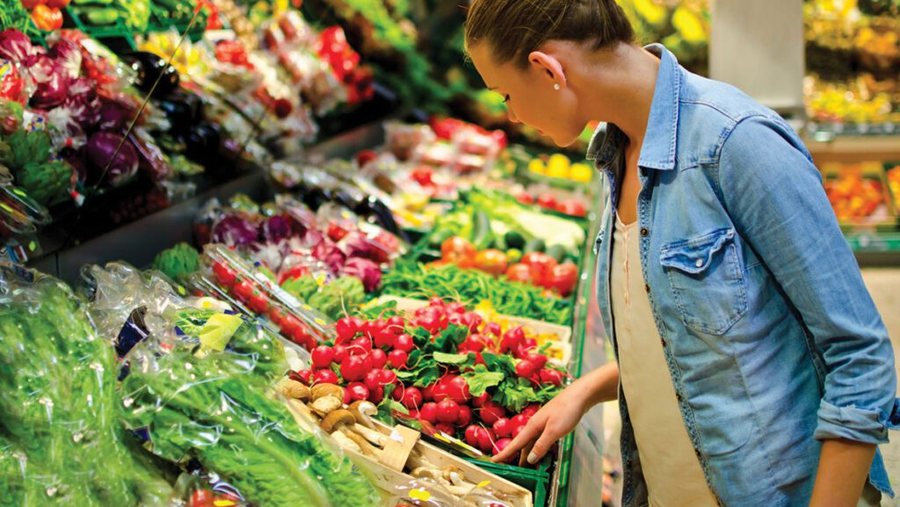
The lack of domestic production, damage caused by floods, and dependence on imports have faced consumers across the country with unaffordable prices that are much higher than last year, mainly for vegetables this month.
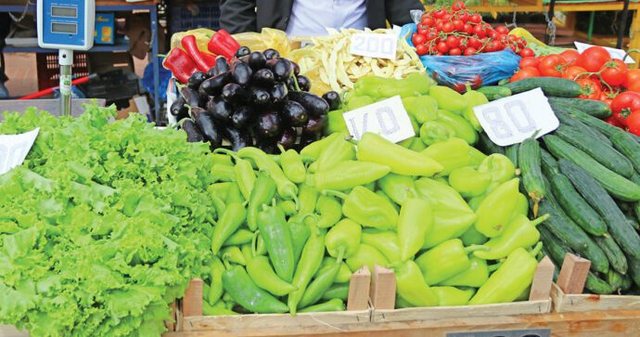
Greenhouse products such as peppers at 400 lek/kg in retail, spinach at 300 lek/kg, and imported eggplants at 400 lek/kg are becoming luxury items, forcing low-income families to shift their consumption towards cheaper alternatives.
A detailed observation of wholesale prices from the Farmer's Portal and data from retail markets indicate a high margin of speculation that exceeds 100% of the product value from retail outlets in Fier, Divjaka and Lushnja to retail markets in the capital.
The situation is even more difficult in more peripheral regions with an aging population like Gjirokastra, where vegetable prices are currently the most expensive in the entire country.
Gëzim, with almost 30 years of experience as a fruit and vegetable retailer at the Dinamo Plant in Tirana, claims that for some products such as spinach, eggplant, pumpkin, broccoli, prices are higher than last year at this time. “Domestic spinach and broccoli were damaged by floods and winter frosts, while pumpkin, eggplant, tomatoes, carrots and many others are coming from imports at higher prices,” the trader claimed.
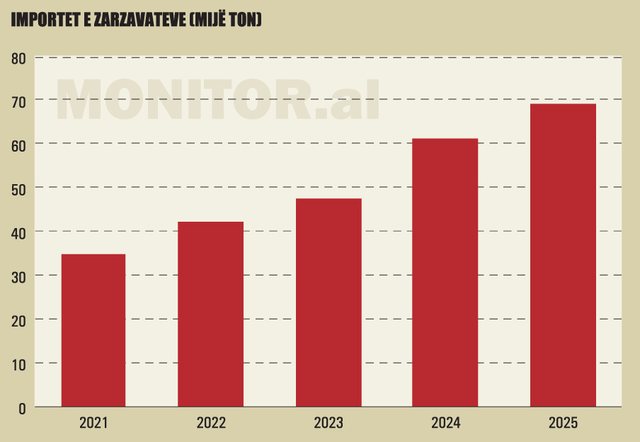
Domestic production is rapidly losing ground to imports. Supermarket shelves and stalls are giving up space in favor of imports. INSTAT data shows that in 2025, the amount of imported vegetables increased by 14% compared to 2024, while in the space of 5 years they have doubled.
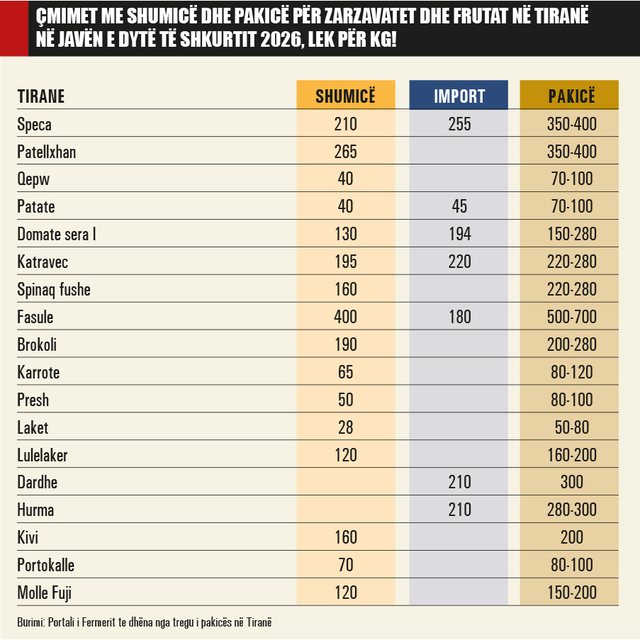
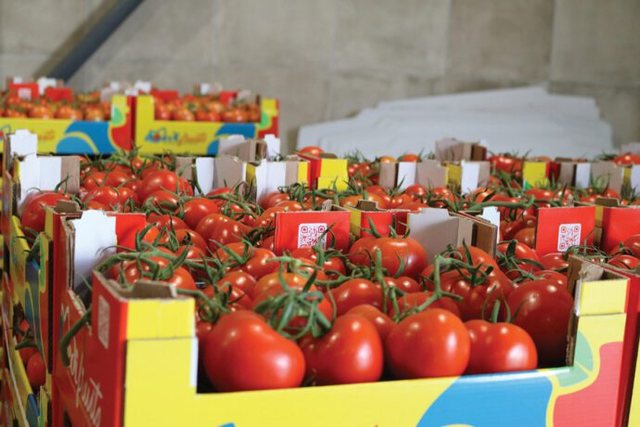
Greenhouse tomatoes and cucumbers are imported for around 194-220 lek per kg, while the local farmer, who often sells tomatoes for 130 lek in bulk, does not have the power to compete with the sustainability and standardization of foreign products.
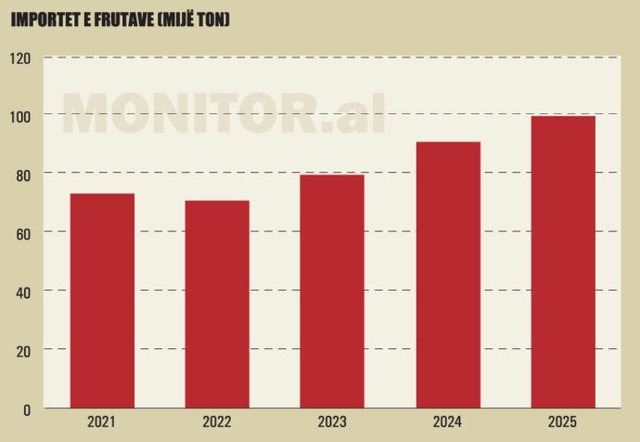
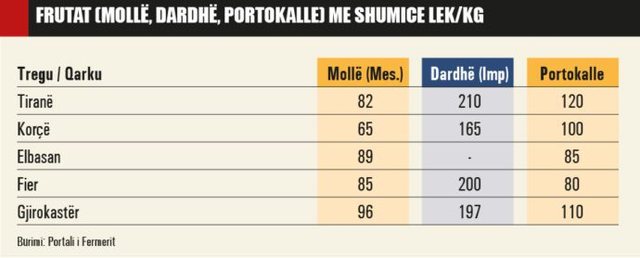
Fruits are following the same trend where pears and dates with a wholesale price of 210 lek dominate the shelves, while domestic production remains fragmented and without logistical support.
This dependence on foreign countries and the malfunctioning of supply chains is exposing the citizens of Tirana to higher prices, paying more than in many capitals in the region.
From the plots to the stalls, prices soar
Tirana consumers often pay double or triple the real value of a product that is produced less than 90 kilometers away, while the chain of intermediaries seems to profit from most of the margin. This also applies to imported products.
At the top of the list of products with the most aggressive growth are greenhouse and seasonal vegetables. Peppers and eggplants, which are sold at around 210-265 lek in wholesale, reach up to 400 lek per kilogram in retail stores.
This jump of almost 90% shows instability that directly affects consumers. Even greenhouse tomatoes, an inseparable element of the Albanian table, show an anomaly: while in wholesale they cost 130 lek and 194 lek, in retail they can go up to 280-300 lek, reflecting a very high margin in the supply chain.
Beans, broccoli and spinach lead the growth
Beans, one of the most popular products in our recipes, hold the price record in the retail market, selling for up to 700 lek per kilogram these days.
Domestic beans retail at 400 lek per kilogram, while imports are even cheaper at only 180 lek per kilogram, which raises strong questions about the trading structure and the reasons why this basic product is experiencing such a rapid growth in the supply chain.
Likewise, broccoli and field spinach exhibit the same trend, where the difference between the collection price and the final sale price remains high, making healthy eating increasingly unaffordable.
One kilogram of field spinach was sold wholesale, according to data from the Farmer's Portal, on February 6 for 160 lek per kilogram, while retail, the price reached 300 lek/kg on the same day in the capital. Broccoli also sold from 190 lek wholesale for around 250-300 lek retail in Tirana markets on the same day.
Fruits between domestic production and import dependence
In the fruit sector, the situation seems somewhat more balanced, but still sensitive to the origin of the product. Oranges and apples remain the last resort for citizens' pockets, with prices starting from 80 to 150 lek at retail.
However, fruits such as pears and dates are almost entirely dependent on imports, with wholesale prices of 210 lek translating to 300 lek for the consumer. This shows that without stronger support for domestic fruit production, the consumer will remain hostage to prices dictated by foreign markets and transportation costs.
"Poor" products are becoming more expensive
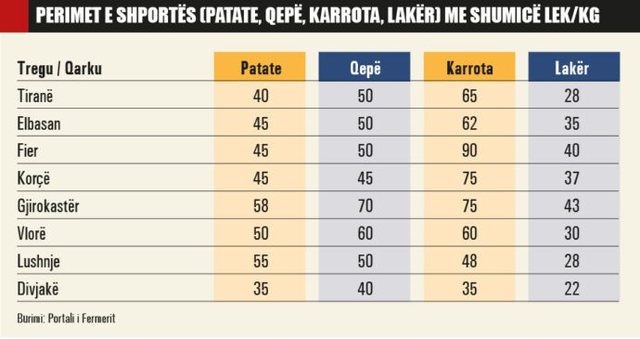
Even those historically known as cheap products, such as potatoes and onions, are not escaping the upward trend. With a wholesale price of 40 lek, they reach 80 lek at retail.
Although the figures seem low in absolute terms, in percentage terms the 100% increase is a strong blow to families with minimal incomes who rely mainly on these products for survival.
Data shows that the Tirana market is suffering from a lack of distribution efficiency. While farmers and collectors operate at relatively low prices, the multiple “steps” through which the product passes to the final buyer are creating an artificial inflated cost, turning the basic basket into a monthly challenge for many citizens.
From producer to market: who wins?
Profit margins from the field of production to the consumer's pocket reveal a speculative mechanism, where the value of the product increases disproportionately at each link in the chain.
This journey begins with the farmer, who bears the brunt of the work and risk, but often gets the smallest piece of the financial pie.
"Across the entire food chain, we are the most penalized. We often work at a loss and are exposed to selling prices without any protection."
"This year we were completely damaged by the floods. While we sell a kilogram of tomatoes on the farm for 80 or 90 lek per kg, in Tirana the same product is sold for up to twice as much," said Mirlind Saraçi, a farmer who cultivates vegetables in greenhouses in the Berat area.
For products like potatoes or onions, which are sold wholesale for 40 lek, the producer is forced to sell at prices that barely cover the cost of seeds, fertilizers, and oil, leaving a minimal profit that rarely exceeds 5 to 10 lek per kilogram.
This disadvantageous position results from a lack of bargaining power and the inability to keep the product in stock for long.
Once the product leaves the farmer's hands, it passes through the collector and wholesale market chain, where the price undergoes its first significant increase. At this stage, the margin represents not only the profit, but also the inevitable logistics costs, such as transportation, packaging, and natural losses during weighing.
The case of beans is the most flagrant example of this transition, where the difference between the import price of 180 lek and the wholesale price of 400 lek shows that large intermediaries apply margins that exceed 100%.
This is because they control supply and have refrigeration capacity, dictating the pace of the market before the product is distributed to small retailers.
The final blow to the citizen's pocket comes at the last link: the retail chain. Neighborhood stores and small market stalls apply the most aggressive margins, which often exceed double the price at which they purchased the product in bulk.
A retailer who buys cabbage for 28 lek and sells it for 80 lek justifies this increase with the high rent of the store, energy bills, and the fact that a good portion of the vegetables are damaged and thrown away.
However, this structure makes the end consumer in Tirana pay for all the system's problems, turning a product that originally costs little into a heavy cost for daily living.
Fieri, Lushnja and Divjaka, with the cheapest prices
The analysis of the wholesale market in Albania for February 2026, based on the updated price database on the Farmer's Portal, shows the difficulties that the winter season brings for local agriculture.
The market is presented at two speeds: on the one hand there are products like potatoes and cabbage, local seasonal products, which maintain very low prices in all cities; and on the other hand there are green and greenhouse vegetables, completely beyond any logic for the purchasing power of the majority of Albanian consumers.
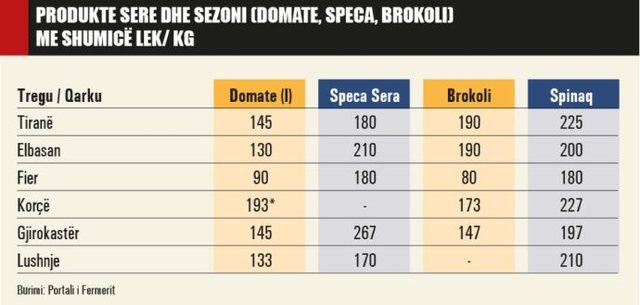
Data shows that Divjaka and Fier continue to play the role of price regulators at the national level. Their dominance in the production of cabbage at 22 lekë per kg and potatoes at 35 lekë per kg is keeping the prices of these products approximately 50% lower than in the outskirts of the country like Gjirokastra.
However, it is noted that even within these areas, products such as spinach or greenhouse cucumbers remain expensive, which proves that the pressure of production costs is present everywhere.
Tirana and Gjirokastra, with the most expensive
The markets of Tirana and Gjirokastra show the highest values, especially for imported products and some types of vegetables that are not produced in this region. Spinach in the capital is being sold at 300 lek per kg, 30% more than last year due to the damage caused to local production by the January floods.
Likewise, peppers in Gjirokastra reach a record price of 350 lek per kilogram, which shows that areas far from production centers depend entirely on logistics and foreign products.
An interesting phenomenon is observed in Korça, where imported tomatoes have completely replaced the local one at a price of around 300 lek per kilogram, while fruits such as apples remain the cheapest in the country (65 lek/kg). Korça supplies the country with apples, while itself imports basic greenhouse vegetables.
Overall, the Albanian market in this period is dictated by the geography of production, where the further away from the Myzeqe area the product moves, the more the cost increases due to intermediaries and transportation, creating price differences that often exceed the simple logic of trade.
High basket prices: where is the burden falling?
The most vulnerable pay the highest tax on the high prices of the basket of goods. While the country's economy reports growth, the benefits of this growth are not distributed evenly, further increasing the burden on those who survive in relation to the top 20% of the population with high incomes.
Pensioners, the most exposed group
For pensioners, any fluctuation in the basket prices is a direct blow to their basic means of living. With an average pension hovering around 18,000 lek, this segment of the population is forced to spend over 60% of their income just on basic food and utility bills.
When we see that products like beans reach 700 lek/kg or peppers at 400 lek, they automatically drop out of their basket.
For a pensioner, the latest indexation of 2.5% (about 500 additional new lek per month) does not even cover the increase in the price of a kilogram of tomatoes and a kilogram of potatoes in the retail market.
This forces them to shift towards products with lower nutritional value or reduce the amount of meals, making malnutrition a health risk.
Minimum wage families, surviving
Families with low wages and economic assistance are also in the risk zone. For these families, the cost burden is closely related to the number of members. Unlike pensioners who often live alone, these families have greater needs for food volume.
For them, the rise in the price of basic vegetables like onions and potatoes is critical. Their basket is sensitive to retail prices in neighborhood stores, as a lack of liquidity prevents them from making large purchases in wholesale markets where prices are lower. This creates the paradox where the poorest people end up paying the highest price per unit.
Middle layer, under multiple pressure
The middle class in large cities like Tirana faces a different kind of pressure. Although their incomes allow for a more diverse food basket, they are hit by rising costs for utilities, transportation, and especially rent, which has skyrocketed in recent years.
For this group, food accounts for about 40% of the budget, but the rest is swallowed up by the costs of an urban lifestyle. They are the group that feels the lack of quality the most; while they can afford the high prices of imported fruits such as pears or dates at 300 lek/kg, they often sacrifice savings or investments in education to maintain their standard of consumption.
The elite, immune to inflation
At the top of the pyramid is only a thin layer of the population. For this group, food expenses account for less than 10-15% of total income.
They are immune to the increase in the price of cabbage or leek, as their consumption is oriented towards premium products and services, where the added value is not related to the basic cost of the agricultural product. This layer benefits from economic growth and investments, while food inflation does not affect their well-being at all.
The cost burden in Albania is distributed in a staggered manner, where the lower you are on the income scale, the heavier every penny added to the price of a kilogram becomes.
The Tirana market, with its wide gap between the majority and the minority, simply deepens this inequality, leaving the lower classes in a constant cycle of survival.
How imports are replacing domestic production
The dominance of imported products in retail markets across the country is proving the crisis of domestic agriculture, which is losing the battle with foreign production, not only in price, but also in continued presence in the market.
Data analysis shows that imported products are no longer entering as a complement to seasonal shortages, but are becoming price-setting and a main reference for the consumer, gradually eliminating the Albanian farmer.
Imports of vegetables in quantity have doubled between 2021-2025 according to INSTAT data. One of the most typical examples of this unequal competition is observed in basic products such as greenhouse tomatoes and cucumbers.
With an import price that fluctuates between 194 and 220 lek, these products set a ceiling that domestic production finds it difficult to challenge. While the Albanian farmer faces high costs of agricultural inputs, oil, and a lack of subsidies, the imported product comes from countries where economies of scale and state support reduce the cost per unit.
This means that, although in bulk, domestic products may seem cheaper, as in the case of tomatoes at 130 lek, the stability and standardization of imports gives the latter an advantage among large traders who seek secure supply and shelf life of the product.
Even more alarming is the case of products that have traditionally been considered the strongholds of our agriculture, such as beans or potatoes. The fact that the cost of importing beans is only 180 lek, while in the retail market they are sold for up to 700 lek, shows that the market is totally dependent on foreign flows.
Imports have managed to break the local production season. Today it no longer matters whether it is harvest time in Myzeqe or Korça, as the market is filled with products from the region or beyond that enter at competitive prices.
This dependence creates a vicious circle: the local farmer, not having the certainty that he will sell his product in the face of cheaper imports, reduces the planted areas, which leads to a further increase in imports to meet the needs of the population.
Moreover, imported products are gaining ground in fruit, where items like pears and dates, which once covered domestic needs, now come almost exclusively from abroad at a wholesale price of 210 lek per kilogram. This shows that the technology of preservation and processing abroad is far ahead of us.
The Tirana consumer is getting used to a product that has a curated appearance and is available 12 months of the year, something that local production, fragmented and without modern collection points, cannot guarantee.
If this trend continues, domestic production risks turning into a luxury product for organic markets, while the daily table of Albanians will depend entirely on trade policies and foreign price fluctuations./Monitor.al/