


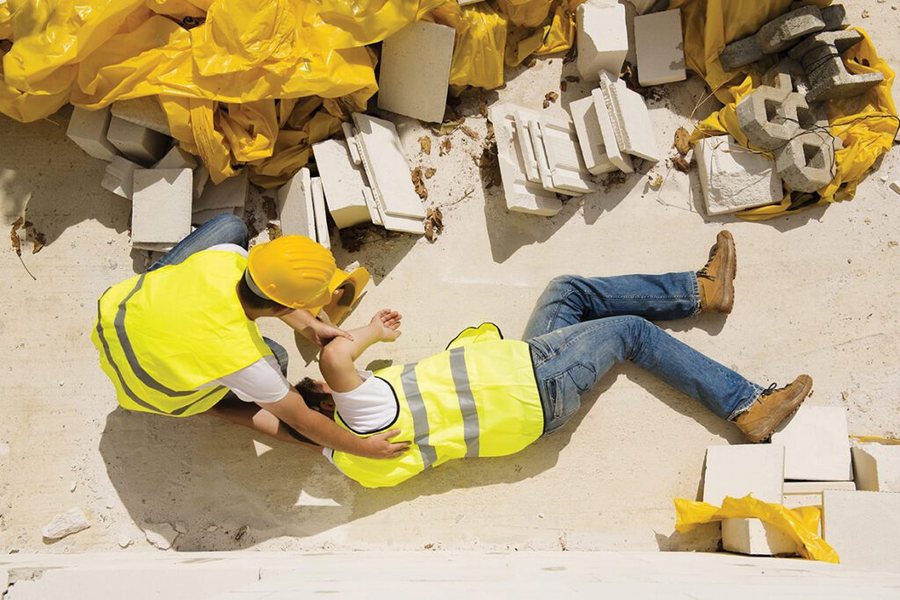
Accidents and health problems at work translate into real costs for the economy. Loss of life, reduced productivity, absenteeism and burden on the healthcare system are effects that are spread over time and across different sectors…
Many of us measure work by the paycheck at the end of the month. But what's left out of this calculation is what happens to our bodies and minds every day during those hours. Work isn't just how we earn money, it's also one of the things that most shapes our health, often without us realizing it.
It's not just about accidents, falls from scaffolding, or machinery that doesn't forgive mistakes. It's also about the fatigue that accumulates, the hours that gradually lengthen, the stress that has no concrete name, but is felt. These are things that don't make it into daily statistics, but that ultimately have just as much weight as a single major incident.
International studies have long concluded that the way we work affects our hearts, our sleep, our nerves, and our longevity. In some cases, work can be protective, providing stability and rhythm. In other cases, it can become a constant source of pressure and danger.
In Albania, this is not something to be imagined. It is enough to look at the figures and the sectors where the most work is done. An economy that relies heavily on construction, physical labor and rapid development automatically creates more exposure to risk. And when you add to this informality and standards that are not always applied on the ground, then the connection between work and health becomes very concrete.
According to the head of the Labor Inspectorate, Eljo Muçaj, the most frequent violations found by inspectors are related to the lack of basic safety measures.
In the field, the most common problems are the failure to use protective equipment, lack of employee training, formal risk assessment documents that are not recognized by staff, and exposure to factors such as dust, noise, extreme temperatures, or physical exertion.
He emphasizes that a large part of these violations are directly related to life-threatening and long-term occupational diseases.
"There is a lack of safety culture in Albanian businesses. In many cases, companies react only after a fine or the intervention of inspectors and not through prevention," says Mr. Eljo Muçaj.
According to him, this shows that the Albanian market still remains "more reactive than preventive", while security continues to be seen as a formal obligation and not as an investment in business productivity and sustainability.
Mr. Muçaj also focuses on informality, which he considers a factor that directly increases risk at work. He says that undeclared workers remain outside social protection schemes, are not trained about risks, and are not included in enterprise safety systems.
"The employee remains outside the system," he says, warning that this creates a work environment where structured and safe behavior is lacking.
Health in all dimensions
When talking about health at work, attention usually goes to physical accidents, but the panorama is much broader. As radiologist Arjana Sina, Medical Director of Wellness Albania Clinic, emphasizes, everything should start earlier, with the identification of the risk, as every employee is exposed every day to factors that often remain underestimated and not properly monitored. The workplace simultaneously affects the body, the mind and the long-term quality of life.
Physical hazards remain the most obvious. In construction, industry, mining or agriculture, exposure to heights, heavy machinery, dust, chemicals or extreme temperatures increases the possibility of serious injuries and occupational diseases.
Musculoskeletal problems from lifting weights, prolonged standing, or repetitive movements are among the most common concerns, even in professions that seem less dangerous.
In practice, as she notes, many of these injuries could be prevented or caught at an early stage if basic control protocols and annual check-ups were actually implemented.
Equally important are the "invisible" risks, those that leave no immediate signs. Long hours of sitting, lack of movement, intense rhythms, and non-stop work contribute to the increase in cardiovascular disease, diabetes, metabolic problems, and sleep disorders.
In many cases, the damage builds slowly and only becomes apparent after years, often at a stage when, according to her, the effects can be difficult to reverse.
Another dimension is mental health. Chronic stress, job insecurity, pressure to perform, conflicts with management, or a lack of balance between personal and professional life create a breeding ground for anxiety, emotional exhaustion, and burnout.
In sectors such as services, call centers, healthcare or education, this burden is often as heavy as the physical risk. Ms. Sina emphasizes that an emotionally healthy and motivated employee has a direct impact on productivity, which makes this dimension not only a matter of well-being, but also economic performance.
There are also social risks, linked to the work culture. Harassment, discrimination, informal work without legal protection, lack of contracts and fear of losing their job make the employee more exposed and less likely to seek help.
In these conditions, as she underlines, there is often a lack of awareness of the risks and the consequences they have on health, causing many problems to be discovered only in advanced stages.
The company lacks doctors
In many Albanian companies, caring for employee health remains more of an obligation on paper than a real practice.
Although the law requires every employer to have an occupational physician and adequate conditions for health checks, the reality is different: hundreds of businesses continue to operate without any medical facilities. Recent inspections by the State Health Inspectorate have highlighted that in most cases not only is there a lack of an occupational physician, but also basic first aid equipment.
During 2024, the last year for which data is available, the inspection bodies of the State Health Inspectorate conducted 1,269 inspections and re-inspections in enterprises to verify whether employers implement obligations for employee health care.
Of these, 1,172 were initial inspections and 97 re-inspections, aimed at checking the coverage of workplaces by an occupational physician, the provision of medical check-ups at the time of employment and during subsequent periods, as well as the hygienic and sanitary conditions in the workplace.
According to the data, most of the violations are related to the absence of a company doctor or a contract with an occupational doctor, as well as the lack of a room or necessary medical equipment. In many cases, employees are not provided with basic medical documentation and health records are not filled out correctly.
According to Law No. 10237, dated 18.2.2010 “On Health and Safety at Work”, every employer is obliged to guarantee the health protection of employees through an occupational physician, who monitors their health status and suitability for the risks of the workplace.
The law also requires every enterprise to have up-to-date health documentation and provide periodic medical check-ups.
Risk sharing
The increase in workplace accidents in Albania is no longer simply a safety issue, but a cost that is materializing directly on businesses’ balance sheets. During 2025, 268 fines were imposed with a total value of 64.5 million lek, a signal that administrative pressure is increasing in parallel with the incidence of violations. But the penalty figures are only the surface of a deeper problem.
Behind them lies a harsher reality. In the same year, 275 accidents at work were recorded, with 212 people injured and 48 killed. These data place the year 2025 among the most problematic of the last decade and confirm a trend that is not reversing.
For the period 2018–2025, the number of victims has followed an increasing trajectory, suggesting that improving standards has not kept pace with economic activity.
The distribution of accidents is not random. The most exposed sectors remain those where economic growth is most intense and where physical work dominates: construction, manufacturing, mining and some services.
In these activities, the combination of high work rates and poor safety standards creates a higher probability of incidents. The most common violations are related to the lack of protective equipment, training and implementation of technical procedures, basic elements that, in practice, are often overlooked.
The institutional response has become stronger. Accident inspections have increased by 23% over the year and in each case violations have been found, often multiple for the same entity. This suggests a direct link between accidents and non-compliance with the rules, rather than a series of random events. In total, 9,532 entities have been inspected and over 205 thousand workplaces have been verified, showing that the problem is not isolated, but widely distributed in the economy.
As the head of the Labor Inspectorate, Eljo Muçaj, also states, the real cost of accidents goes beyond fines. For businesses, they translate into interruptions in activity, loss of productivity and additional financial obligations. For the state, the effect is reflected in the increased burden on the health system and insurance schemes, as well as in the loss of active contribution from the workforce.
Mr. Muçaj says that the workplace risk profile in Albania is no longer related only to classic physical accidents, but is becoming increasingly complex.
According to him, in addition to falls from heights or the use of machinery, organizational risks are also increasing today, such as long working hours, pressure and fatigue, while the lack of real implementation of safety standards in practice remains a problem.
He singles out construction, mining, the manufacturing industry and, most recently, the delivery sector as the activities with the highest risk to occupational safety and health./Monitor.al/