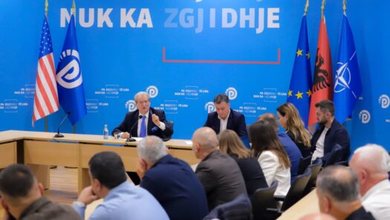
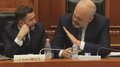



The Diaspora Summit held in Tirana was accompanied by criticism in some of the panels, reinforcing the government's usual propaganda.
During the summit proceedings, diaspora representatives openly articulated their dissatisfaction with the way it was organized and included in the discussions. One of the most critical voices was Eva Baçi, who lives and works in Bologna.
In the panel where Niko Peleshi and Taulant Balla were present, Baçi raised the concern that, despite the great interest of emigrants to return and contribute to the country, concrete mechanisms for their inclusion are lacking. According to her, such activities often remain at a declarative level and do not truly reflect the voice of the diaspora.
"The desire to return to Albania is very great, so we participate in the Summit because we are waiting for an open window from the motherland, to return, to open the door for us. The script is written very beautifully, like that director who writes very beautifully, we hear the narrative, but the main actors that are the Diaspora are missing," she said.
Baci stressed that diaspora participants do not have the necessary space to express their opinions, arguing that they should be considered the "main actors" of the summit, and not simply listeners of politicians' speeches.
"This is the Diaspora Summit. I think that apart from the opening, which should be given to the minister, the prime minister and the president, the main actors are us. I wanted to have a discussion and I was not given the right to speak. We need to finish these beautiful films, so that we can just listen," said Baçi.
She further highlighted that many Albanian professionals abroad, despite their high qualifications, feel unrepresented and unsupported by Albanian institutions. According to her, the diaspora is often treated as a statistic, rather than as a real potential for the country's development.
Finally, she addressed a direct message to the political class, emphasizing the need for reflection on the relationship with the diaspora and its inclusion in the country's development processes. According to her, there is a visible disconnect between policymakers and the reality of immigrants, which requires concrete changes in the institutional approach.