


The famous figure of Hedda Gabler, the famous anti-heroine of Norwegian playwright Henrik Ibsen, continues to remain one of the most important and controversial roles for women in the history of world theater. With the release of the new film “Hedda”, directed by Nia DaCosta, this 1891 work returns to the spotlight, provoking the question once again: is Hedda a victim of her circumstances, or a monster who destroys everything around her?
In the original play, Hedda, a young bride unhappy in her cold marriage to academic George Tesman, finds herself locked in a loveless and aimless life. Tired of the monotony and driven by a desire for power and control, she meddles in the lives of others – actions that end in tragedy, with her suicide.
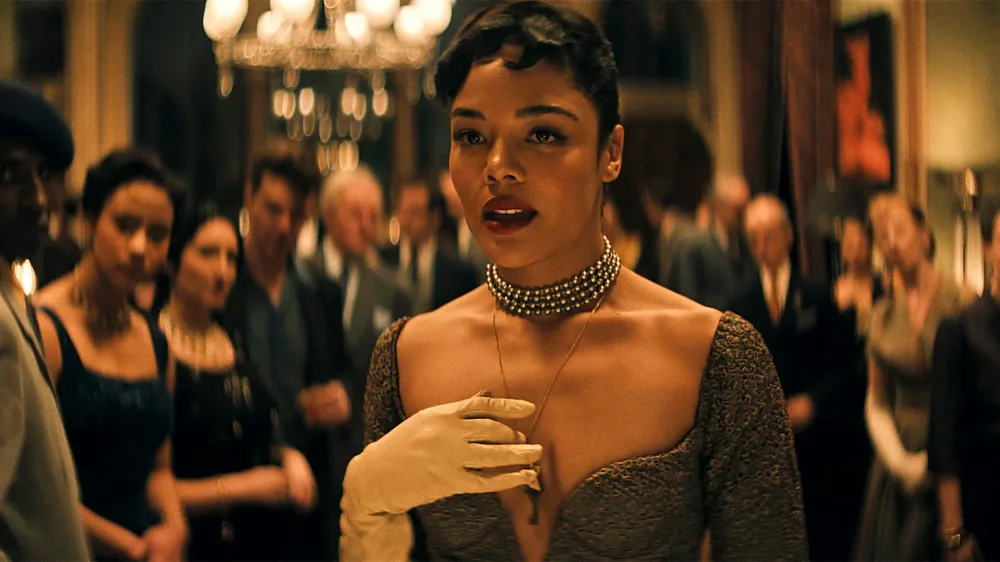
The new film version, “Hedda,” brings a modern reinterpretation of the story, moving the event to 1950s England – “the era of the great pretense,” as actress Tessa Thompson, who plays the title role, defines it. In this version, Hedda’s ex-lover, Ejlert Løvborg, is transformed into a woman – Eileen, played by actress Nina Hoss – giving the narrative a new gender and social dimension.
“Hedda is a master of pretense and facade,” Thompson points out. “In the 1950s, people were obsessed with rules, with how they spoke and behaved. It was a society frozen in form, where everything had to look perfect.”
In DaCosta's version, Hedda is portrayed as the illegitimate, mixed-race daughter of the late General Gabler, opening up a debate about race, class, desire, and the position of women in a conservative society. The events unfold over the course of a single night, at a decadent party, where the characters' tensions, hypocrisy, and self-destruction are revealed.
"Hedda is a woman who will reveal everyone's masks, perhaps without knowing how dangerous she herself is," said DaCosta.
A figure who challenged 19th century norms
When it first appeared in Munich in 1891, Hedda Gabler shocked European audiences. Critics of the time, mostly male, described Hedda as an “unwomanly woman” and considered it impossible for a woman to stand outside the usual models of femininity.
According to Kirsten Shepherd, a professor of theatre at the University of Oxford, Ibsen foresaw the social upheaval that would come with the women's rights movement of the early 20th century. "He created a woman who rejects the constraints of a male world - an act that was revolutionary in itself for the time," Shepherd said.
At the center of the work lies the eternal question: is Hedda a victim of social oppression or a conscious manipulator who seeks power through destruction?
A role that captivates generations of actors
The role of Hedda has been played over the years by big names on the world stage, including Maggie Smith, Ruth Wilson, Isabelle Huppert, Annette Bening, Rosamund Pike and Cate Blanchett.
Ibsen himself, in a letter to the Swedish poet Carl Soilsky, explained why he chose the title Hedda Gabler and not Hedda Tesman:
"My goal was to show that Hedda should be seen more as her father's daughter than as her husband's wife."
This detail shows that despite her marriage, Hedda remains a figure bound to her origins and strong character, impossible to control by traditional norms.
The woman who inspired Ibsen
Many scholars link the birth of this character to the story of Laura Kieler, a Norwegian-Danish writer who experienced a deep marital crisis and ended up in a psychiatric hospital after being rejected by Ibsen. It was her story that previously inspired the work A Doll's House, in which the protagonist Nora leaves her husband to find herself – an act that shocked public opinion at the time.
Unlike Nora, however, Hedda does not seek liberation – she turns frustration into destruction, challenging the concept of the good, wise woman expected by society.
The legacy that never fades
When the play was first staged in London by actress Elizabeth Robins, she brought a new vision: luxurious, elegant, yet shocking. This version elevated Ibsen to a new international level.
In today's film, DaCosta seeks to restore this sense of psychological tension and aesthetic beauty, through an environment filled with mirrors that reflect the characters' masks.
“All three women – Hedda, Eileen and Thea – are trying to figure out what freedom is,” the director emphasizes. “They push the boundaries of what society allows them.”
According to critics, Hedda Gabler remains an immortal figure because she embodies the eternal contradictions of human nature – the desire for control, the fear of emptiness, and the struggle for identity.
Whether as a "monster" or a "victim", she remains a profound reflection of the female soul and one of the most complex figures that world theater has ever known.