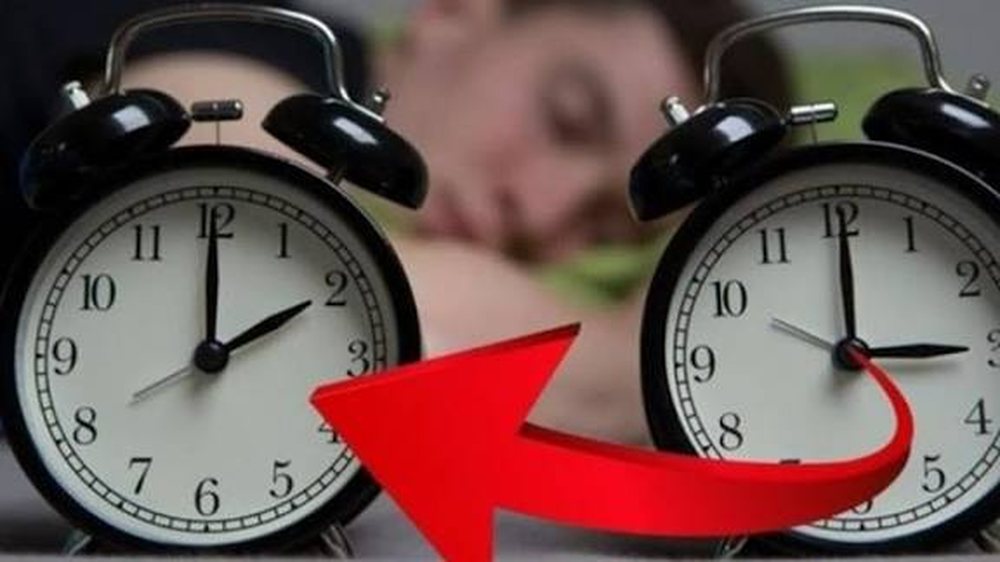
Changing the clocks, a practice that occurs twice a year, has been linked to a range of health impacts – from heart attacks to traffic accidents. As the days get shorter and we prepare to turn back the clocks, many people are happy to get an extra hour of sleep. However, studies show that this may not be as beneficial as people think. According to research, turning the clocks back in the fall is associated with an increased risk of depressive episodes. On the other hand, turning the clocks forward in the spring is even more harmful, being associated with increased cases of heart attacks, strokes and traffic accidents.
Origin of the daylight saving time system
Daylight Saving Time (DST) was first introduced in the United Kingdom in 1916, during World War I, to save energy and make the most of daylight. Currently, time is moved forward one hour on the last Sunday in March and back one hour on the last Sunday in October.
Today, about 70 countries around the world – more than a quarter of the global population – observe this system. In the US, daylight saving time was officially introduced in 1966.
Health effects
Recent research has shown that changing the clocks can have a negative impact on human health, especially when the clocks are set forward in the spring, resulting in less light in the morning and more in the evening – meaning an hour less sleep. A 2014 American study found that the number of patients admitted to hospital for heart attacks increased significantly on the Monday after the clock change. Similar results have been observed in Sweden, Croatia, Germany, Brazil, Finland and Mexico. A joint analysis of several studies concluded that heart attack cases increase by an average of 4% after the switch to daylight saving time.
The time change is also linked to an increase in strokes and mental health problems, including depression, anxiety, and substance abuse. In the US, studies have shown that fatal traffic accidents increase by 6% in the weeks following the spring time change – a direct result of sleep deprivation.
How does it affect biological rhythm?
Experts say the biggest impact comes from disruptions to circadian rhythms – the body’s internal biological clock that determines when we should sleep and wake up. Our bodies synchronize this rhythm through sunlight: at night, reduced light stimulates the production of melatonin, a hormone that causes drowsiness, while in the morning light interrupts its production and increases cortisol levels, which helps us wake up. When the clocks are moved forward in the spring, the increase in light in the evening inhibits melatonin production, making it harder to fall asleep. On the other hand, darker mornings cause people to wake up before the body is naturally ready.
Professor David Ray from the University of Oxford explains:
"When people are forced to live against their internal clock, even an hour difference can create serious health consequences. If an entire population is shifted by one hour, this translates into a large number of diseases that could have been avoided."
Recent studies show that even small changes in sleep cycles can have measurable effects. People living on the western edge of time zones, for example, have a higher risk of diabetes, cardiovascular disease, and depression—a situation similar to the effects of daylight saving time.
Does turning back the clocks affect autumn?
Although turning back the clocks in the fall gives us an extra hour of sleep, the benefits are limited. Studies show that people sleep an average of only 33 minutes more on the night of the clock change, and lose sleep over the following week.
A Danish study, which analyzed data from 1995 to 2012, found an 11% increase in depression cases in the ten weeks following the autumn time change.
However, Professor Joan Costa-i-Font from the London School of Economics points out that there are some small benefits in terms of well-being. He found that in the autumn period, people sleep about 40 minutes longer, feel more rested and happier. But overall, the harms of summer time in the spring outweigh the benefits in the fall.
His study calculated that changing the clock twice a year costs economies around 750 euros per person per year, due to impacts on productivity, health and well-being.
Should daylight saving time be abolished?
In 2019, the European Parliament voted to abolish the clock change system, but the decision has not yet been implemented, as member states cannot agree on which time to keep – summer or winter. Most people prefer summer time, but scientists recommend keeping winter time, as it better matches the body’s natural rhythm. After all, as we prepare to turn back the clocks and face darker evenings, experts remind us that the darkness of autumn can improve our sleep – a basic need that most of us neglect.