


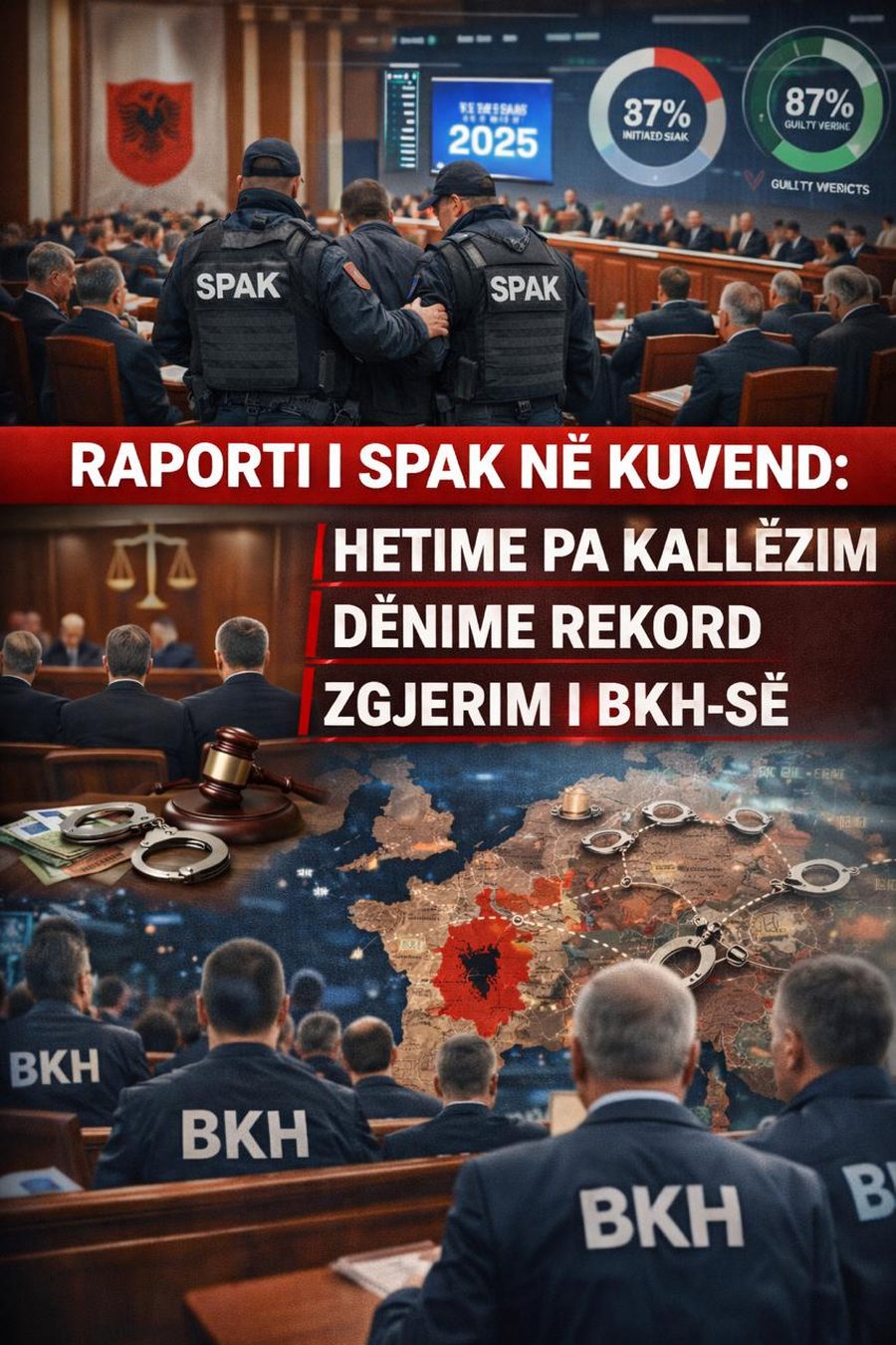
The annual report of the Special Structure against Corruption and Organized Crime, submitted to the Assembly and obtained by VNA, reveals several indicators that show a noticeable change in the way the institution is functioning.
The figures show a more proactive SPAK in launching investigations, a high success rate in court, and an increase in international cooperation in prosecuting organized crime.
A more aggressive SPAK: 37% of investigations started without a complaint
One of the most significant data is related to the way investigations are initiated. Of the 294 new criminal proceedings registered during 2025, 37% were initiated primarily by SPAK itself, without a previous report or denunciation.
This indicator has almost doubled compared to 2024, when only 19.8% of proceedings were initiated by the prosecution itself.
At the same time, the report shows that citizens' trust in the institution remains high, as 33.5% of investigations have started from reports made directly by citizens.
High effectiveness in the Special Court
The results in the Special Court against Corruption and Organized Crime show a high success rate for prosecutors.
During 2025, 87% of the decisions were guilty verdicts, while only 13% of the defendants were declared innocent.
In total, 66 convictions were issued this year, leading to 197 convicted persons.
Albanian crime across borders and international cooperation
The expansion of Albanian criminal groups abroad has led SPAK to intensify cooperation with international partners.
According to the report, during 2025, 156 requests for legal assistance were sent abroad, while 95 requests received from foreign authorities were processed.
Expansion of the BKH
To cope with the increasing volume of investigations, the National Bureau of Investigation is expected to expand.
During 2026, the number of BKH investigators is expected to increase from 60 to 100 investigators, a step aimed at accelerating investigations into criminal groups and major corruption cases.
The report submitted to the Assembly shows that the fight against corruption and organized crime is entering a new phase, where investigations are increasingly being initiated by the institutions themselves and are relying on international cooperation and greater investigative capacities.