



The Special Court rejected SPAK's request for the confiscation of the assets of Elvin Merlikë from the "Golden Bullet" case and his family circle, arguing that the assets were placed before the criminal act and that the accounting experts only had an advisory role for the court.
In 2022, the Special Prosecution Office registered a proceeding against 32 persons suspected of being implicated in providing the conditions to commit the murder of Indrit Dokles, while the latter was wanted for the same charges.
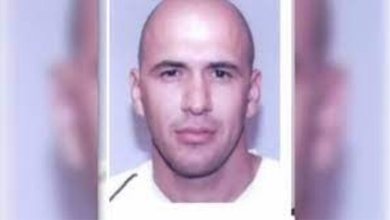
Among the members of the group was Elvin Merlika, who was arrested in December last year and charged in the file known as the "Golden Bullet".
According to SPAK, Merlika collaborated with Ervis Martinaj and Alket Xhixha in the attempted murder of Dokle, acting as a structured criminal group. The plan to kill Dokle was initially revealed by the repentant Nuredin Dumani, who admitted that he had received orders from Martinaj to kill Dokle in exchange for 500 thousand euros. Dumani implicated Merlika and Xhixha in this incident, while the latter deny the charges.
However, the above proceedings brought Merlikë into the circle of subjects of the "Anti-Mafia" law and in January 2023, the investigation was expanded to include property.
SPAK prosecutors, Doloreza Musabelliu and Behar Dibra, requested at that time in court the seizure of the assets of Merlika and persons associated with her, specifically three business companies, three plots of arable land with an area of 3250 m2 each; land with an area of 6026 m2; forest with an area of 6026 m2; eight apartments; two garages; a basement; and nine cars.
The request for seizure was made based on the results of the preliminary investigation, from which it was concluded that there are suspicions that these assets are not justified by legal sources. It was also assessed that there are reasonable grounds to believe that there is a real risk of their loss, seizure or transfer to other persons, in order to make their confiscation impossible.
In January 2023, the Special Court partially accepted SPAK's request, seizing Merlika's assets with the exception of one apartment. The decision was later upheld by the Court of Appeal and the Supreme Court.
In the context of the property investigation, SPAK ordered the performance of an expert report to verify the financial ability of Merlikë and related persons to create assets during the period 2009-2022. The experts did not include in the financial analysis the amounts of money for which there were no documents justifying their source.
In response to questions from the Prosecution, experts have concluded that Merlika and the people associated with him do not justify the listed assets with legal sources, as they result in a negative balance of 32.3 million lek.
But the conclusion of the SPAK experts was opposed by the affected persons and was subsequently rejected by a decision of the Special Court.
Merlika and his family members have filed their objections during the hearing of the request for confiscation of the assets, claiming that they were created with legal sources. They also objected to the fact that the request for confiscation was made while Merlika is still in the criminal process, without a final decision on guilt or innocence.
They also claimed that the expert examination conducted was biased and with numerous inaccuracies, not reflecting the real income of the family and neglecting the documents presented by the defense.
The court's reasoning
Judge Erjon Bani, who reviewed SPAK's request for the confiscation of the assets of Elvin Merlikë and his family, reasoned in an extensive and detailed manner the Albanian legislation, including constitutional provisions, the practice of the European Court of Human Rights, as well as the evidence and claims raised by the parties in the process. In conclusion, he listed a number of reasons why he found SPAK's request for the confiscation of these assets unfounded in evidence and law.
Although the Court considers that Merlika is subject to the “Anti-Mafia” law, it finds that in the present case there are no significant indications of involvement in criminal activity at the time of the assets being deposited by him and the related persons, who were part of this trial. The Court generally considers that the assets were created before there were any indications based on evidence that citizen Elvin Merlika was involved in criminal activity.
The decision also emphasizes that during the property investigation, it must be proven whether the commission of the criminal activity has produced illegal income in the form of profit.
He analyzes Elvin Merlika's role in the crime for which he is accused, noting that Nuredin Dumani has stated, among other things, that he has benefited from an amount of 100 thousand euros, but there is not sufficient data to show that Merlika has benefited from any amount of money.
"Under these conditions, the Court considers that if, within the framework of the property investigation, the assets were considered to have been placed ... after January 2021 by citizen Elvis Merlika, again in the specific case, the assets owned by him cannot be subject to confiscation, as there is no evidence-based indication that he has generated illegal income from the criminal act," the decision states, which also emphasizes that only those assets that correspond to the value of the proceeds of the criminal offense are subject to confiscation.
"The prosecution in any case has the duty to identify the assets that are alleged to be the product of criminal activity as provided for in Article 3 of the law, in order for the public interest, which determines the imposition of property restrictions, to be proportionate to the measure taken by imposing only those assets that have their source from criminal activity, a necessary legal and procedural element for the correct identification of the assets subject to preventive confiscation," the decision states.
The Court notes that in this case, SPAK did not present evidence to prove that the assets for which it is seeking confiscation come from income belonging to the criminal activity of citizen Elvin Merlika. This is because, according to Bani, the existence of a causal link between the time of creation of the assets and that of involvement in criminal activity is not proven.
Another condition that the prosecution's investigation must meet, according to Bani, is the confirmation that the assets in the name of related persons are directly or indirectly disposed of by the person under investigation as part of organized crime.
"This evidence must contain sufficient data, not simply in the form of suspicions and indications, but also concrete, accurate facts and circumstances, which in harmony with each other constitute indirect evidence," the decision states.
The Court considers that, in this case, the Special Prosecution Office has only proven the existence of a family, gender, relationship between the mother-in-law of citizen Elvin Merlika and the five citizens whose assets were seized.
"Given that during the trial it was proven that the assets of the family members of citizen Elvin Merlika were mainly acquired before he was suspected of being involved in criminal activity, it makes no logical or legal sense for the assets to be placed in the name of his family members or third parties," Bani reasons and adds that there is no indication that they are fictitious.
The arguments of the court decision are also supported by lawyer Eugen Beçi, who told BIRN that the date of the commission of the criminal offense was a fundamental dividing line in property investigations.
"Any property created before that date, naturally, cannot be subject to seizure and subsequent confiscation," he stressed.
Meanwhile, Beçi estimates that, for assets created after the date when the involvement of the investigated person in the crime is proven, it is not necessary to prove whether or not they were generated as proceeds from a criminal offense.
"The 'Anti-Mafia' Law is clear. If the property was created after suspicion that you committed a criminal offense, you are obligated, with the burden of proof, to justify the legality of any property you have," Beçi emphasized.
Unlike the Prosecution's request, which was based on the negative balance of assets in the expert report, the court considers that "the expert's opinions constitute only advice for the courts."
"The fact that the expert provides specialized opinions to the court in a non-legal field makes the expert's opinion attract greater attention at the time of its assessment by the ordinary courts and that the latter must argue in detail the opposite opinion. If they do not accept the expert's opinion, they must present convincing arguments, but this does not mean that the courts must always agree with the experts' conclusions," the decision states.
In conclusion, Judge Bani ruled to dismiss SPAK's request for the confiscation of these assets, as unfounded in law and evidence. He also requested the revocation of the 2022 and 2023 seizures of these assets.
The Special Prosecution Office filed an appeal against the decision of the Special Court of First Instance on Friday, on the last day of the deadline. Asked by BIRN about her position on the decision, the prosecutor in the case, Doloreza Musabelliu, said that this position would be procedurally expressed in the appeal. /BIRN/