


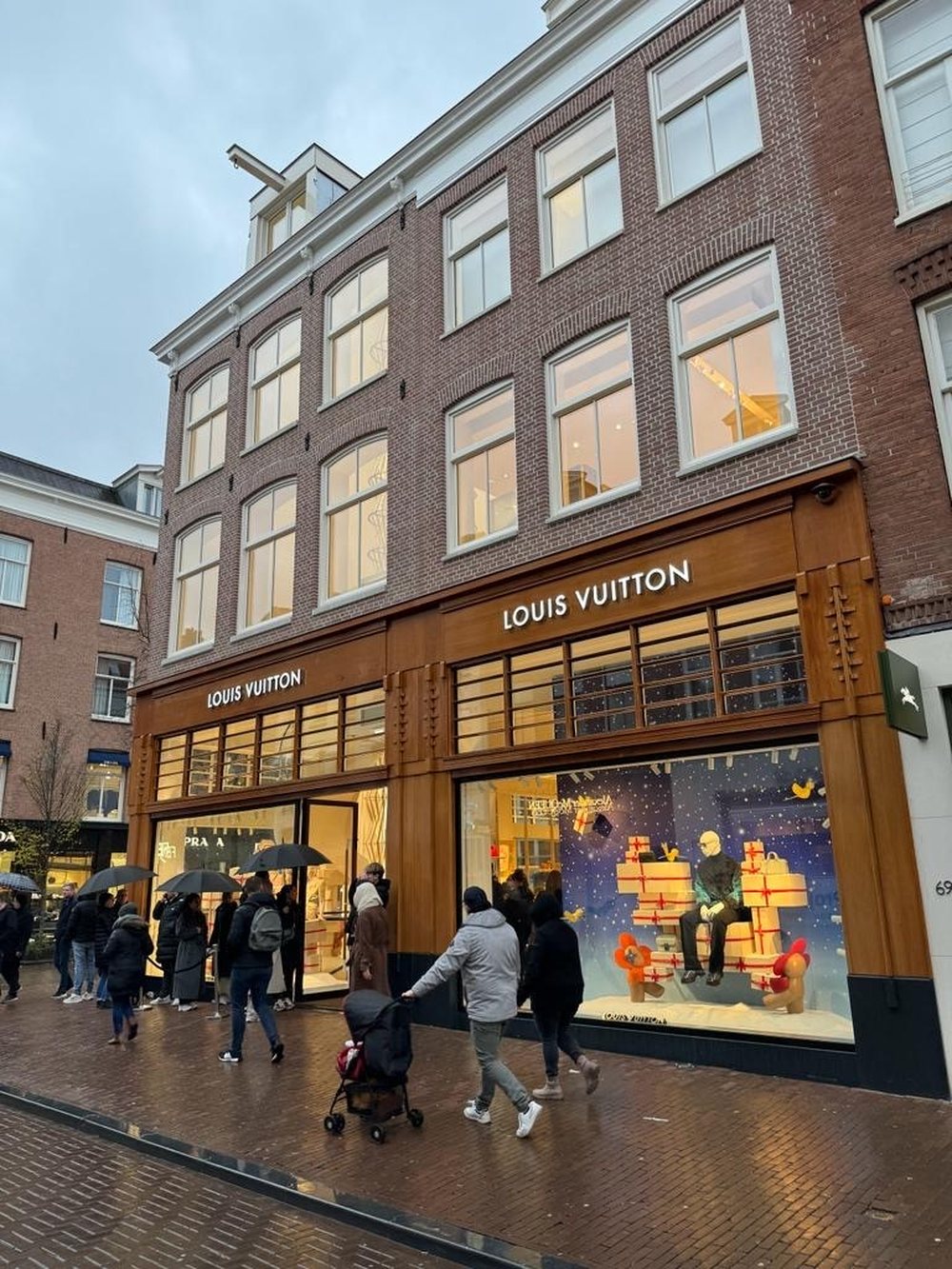
The Dutch branch of the famous luxury brand Louis Vuitton (Louis Vuitton BV) has been fined 500 thousand euros by the Public Prosecutor's Office for violating the Act on the Prevention of Money Laundering and the Financing of Terrorism (Wwft). The decision comes after a wide-ranging money laundering investigation, which revealed shortcomings in the verification of customers who made large and repeated purchases in cash.
According to the authorities, the company had failed to properly verify the identities of customers who made significant cash transactions over an extended period. The case was settled with a criminal injunction, in order to avoid a lengthy trial in the Rotterdam District Court.
Suspected money laundering scheme
The investigation is related to a large-scale money laundering network, centered on the 55-year-old Albanian from Saranda, Thanas Bako, who was sentenced in September 2024 to 7 years in prison by a court in Rotterdam for involvement in serious forms of organized crime. According to prosecutors, a 36-year-old woman from Lelystad, identified as Bei W., spent over 2 million euros in illegal funds between August 2021 and February 2023, purchasing luxury products in several stores in the Netherlands, including Louis Vuitton. She is suspected of using pseudonyms and different email addresses to hide her identity and avoid mandatory financial reporting.
Authorities say the luxury goods, mostly designer handbags, were being shipped to China for resale, thus masking the illicit origin of the money. The method is known as “Daigou” trade, a practice used to transfer monetary value through luxury goods. Evidence collected includes text messages, receipts and security camera footage. Boxes prepared for overseas shipments were also found in the woman’s apartment.
Suspicions of internal involvement
The investigation also includes a former Louis Vuitton sales assistant, who is suspected of having helped the woman by notifying her of the arrival of new products and advising her on how to divide her purchases so as not to exceed the 10,000 euro threshold that triggers reporting to the Financial Intelligence Unit (FIU).
From January 1, 2026, Dutch law will prohibit cash payments over 3,000 euros. The prosecution emphasizes that luxury brands have the same obligations as financial institutions to verify customers under anti-money laundering rules. Meanwhile, the trial against the 36-year-old woman, the suspected former employee and a third person continues in the District Court of Rotterdam.
Who is Thanas Bako?
Thanas Bako is considered by European authorities to be one of the key figures in international money laundering. He was arrested in Athens on May 31, 2023 at the request of the Netherlands and was subsequently extradited. According to investigations, in the period June 2020 – March 2021, his network moved around 246 million euros for criminal organizations. Bako is suspected of running an “underground bank” with two warehouses in Wateringen and Nieuw-Vennep, where the money was counted and stored. The network consisted of couriers who worked as plumbers, carpenters or window cleaners, with clean criminal records to avoid suspicion.
Communications between members of the network took place through the encrypted ANOM application, uncovered by international investigations. According to court documents, for every transport of 1 million euros, couriers received about 0.2% commission.
One of the most serious episodes of the investigation is related to an event on February 23, 2021, when two couriers of the network were taken hostage in a warehouse that served as a cash collection point. Authorities later discovered that over 165 million euros had been counted in this environment, divided into about 200 transactions. According to the Prosecutor's Office, the investigation into Bako and his associates revealed a well-organized structure, which functioned as a parallel banking system for the circulation of illegal money in Europe.