


By Muriel
Political history knows an unwritten law: parties do not lose just because the opponent is strong. They lose when, faced with changing times, they choose to defend their structure instead of reforming themselves.
The recent elections in the Democratic Party should be read precisely in this light. On the surface, they were a routine process for selecting the secretariat. In essence, they were a referendum on the political model that will guide the opposition in the coming years. The verdict was clear: The Democratic Party did not choose change. It chose continuity.
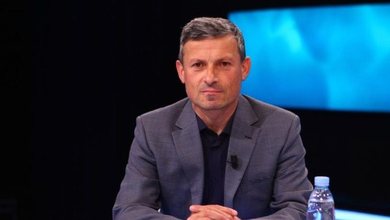
The re-election of Flamur Noka as Secretary General, along with the new configuration of the secretariat, represents the confirmation of an organizational philosophy: strong control of the apparatus, loyalty to the leadership, and stability of the internal structure. This model can keep a party disciplined, but it is not certain that it will make it victorious.
Flamur Noka has shown political energy, organizational skills and a constant presence on the ground. However, a General Secretary is not measured only by the ability to organize militants, but by the ability to expand the party and gain the trust of the strata that do not yet vote for him.
After the 2025 parliamentary elections, the opposition needed a deep analysis of the defeat. Instead, the recent process gave the impression that the problem was not the leadership model, but only the political circumstances. This is why the secretariat elections matter much more than the names themselves.
Giuseppe Tomasi di Lampedusa wrote: “If we want everything to remain as it is, everything must change.” This is the metaphor of false reform: faces change, but not the decision-making mechanism.
Promoting younger figures can bring energy, but renewal is not measured by age; it is measured by autonomy, competition, and meritocracy. Vilfredo Pareto argued that political systems need elite turnover. When they close in on themselves, they lose the ability to understand the society they claim to represent.
Today, the government faces long-term consumption and political pressure. But the weakening of the opponent does not automatically produce trust in alternatives. Citizens demand not only the removal of a government, but the conviction that the opposition represents a better model.
Antonio Gramsci wrote: “Crisis arises precisely when the old is dying and the new fails to be born.” The Democratic Party is at this very crossroads today. The model that has held it together is failing to bring it back to power, while the new model has not yet found space to be born.
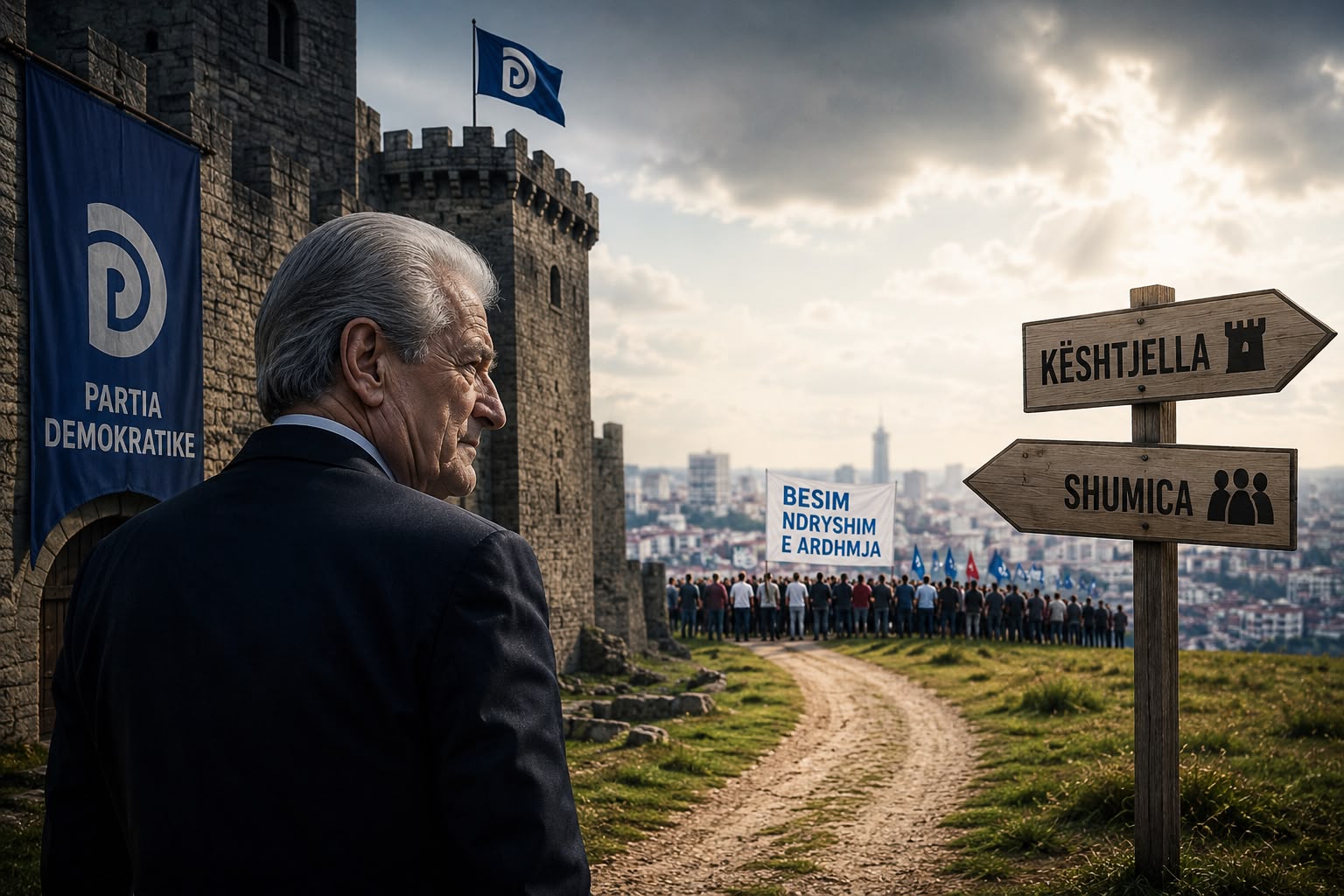
Kjo është dilema e kilometrit të fundit të Sali Berishës: jo nëse do të vazhdojë të dominojë partinë, por nëse do të zgjedhë ta transformojë atë në momentin kur ndryshimi është bërë kushti i vetëm për rikthimin në pushtet. Sepse partitë nuk fitojnë zgjedhje duke administruar më mirë aparatin; ato fitojnë kur dalin nga kështjella e tyre dhe bindin shumicën e qytetarëve se janë bërë më të mira se vetja e tyre e djeshme.