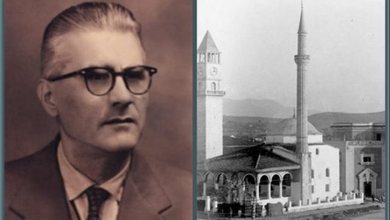



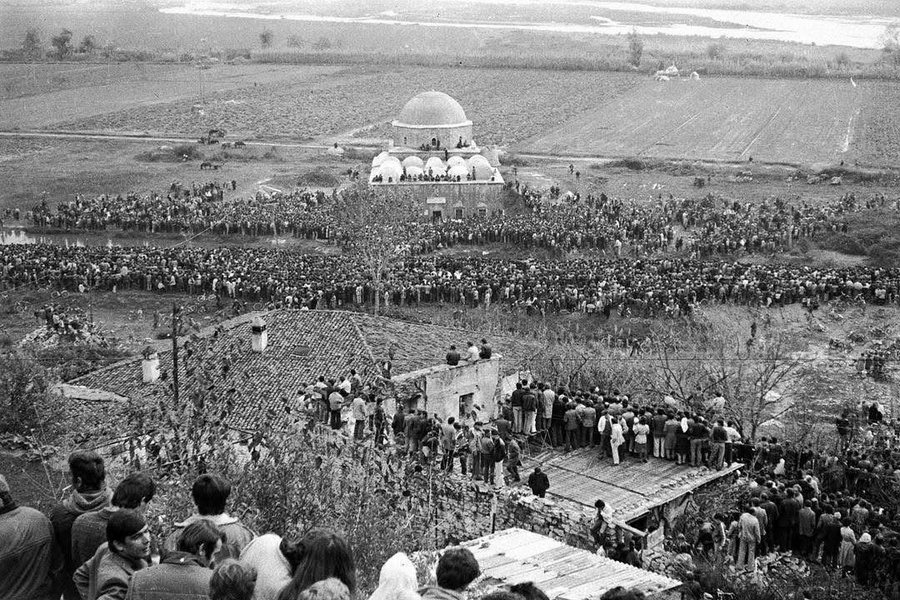
On November 16, 1990, around the Lead Mosque in Shkodra, one of the most courageous acts of Albanian society at the end of the dictatorship took place: thousands of people gathered publicly to pray, to see each other, to be together. Without official calls. Without permission. Without guidance from anyone. Simply with the inner need to no longer hide.
It was the first time after 23 years of religious prohibition that citizens came out publicly as believers. By 1967, mosques had been closed, churches had collapsed, tekkes had been destroyed, and faith had been violently suppressed. People prayed secretly, at home, in silence, preserving fragments of hope in the simplest and most dangerous way.
But on that cold November day, the silence was broken. The large crowd had no banners, no slogans, no demands for power. It stood alone, on the frozen ground, in front of a ruined mosque — and said with its body and presence:
“Enough.”
It wasn't just a religious rite. It was an act of emancipation. An open challenge to the fear the regime had instilled for decades. A first step toward the civil liberties we take for granted today.
That event woke up the country. After November 16, no one could silence the people again. Just a few weeks later, the regime was forced to back down and declare religious practices permissible — a chapter closed by force in 1967 and reopened by the courage of ordinary people in 1990.
This photograph — black and white, heavy and filled with every human emotion — is clear evidence of what happened:
Freedoms are not given. Freedoms are taken. With risk, with attitude, with a shared step.
Today we don't just remember a date. We remember a crack. We remember the breaking of a long wall of fear. We remember the moment when Albanians chose to no longer bow to anyone — except God and themselves.