An analysis published by La Stampa sheds light on the paradox that is accompanying the initiative to create a "Peace Board" in Washington. According to the Italian newspaper, the project presented as a mechanism to manage post-war Gaza risks turning into an ambiguous structure, where the lack of binding deadlines and the elasticity of political formulations could favor the continuation of control on the ground, instead of a real transition.
At the center of the analysis lies the fundamental dilemma: will the Board be an instrument for reconstruction and stabilization, or a diplomatic framework that indefinitely postpones the issue of Israeli military withdrawal from Gaza?
A few days before the inauguration of the Peace Board in Washington, the contradictions surrounding this initiative are becoming increasingly clear. The mechanism is intended to organize the "day after" of the war in Gaza, but it risks turning into an ambiguous structure that, rather than changing the reality on the ground, could prolong it.
On paper, the plan seems simple: funding for reconstruction, stabilization, disarmament of Hamas, withdrawal of the Israeli army, and deployment of an international force. But in practice, the situation is much more complicated.
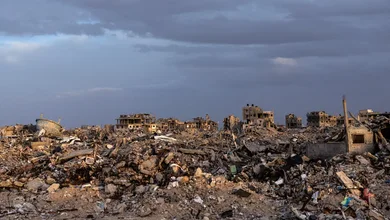
Gaza today is divided into controlled zones, with crossing points, movement restrictions, and military decisions that determine everything from the entry of aid to the opening of a construction site.
Israel's decision to send Foreign Minister Gideon Sa'ar to Washington, rather than Prime Minister Benjamin Netanyahu, shows political caution. Israel is participating in the initiative, but without wanting to open the debate on the most sensitive issue: when and how the troops will withdraw from Gaza. The discussion shifts to security and the disarmament of Hamas, while the concrete deadlines for the withdrawal remain unclear.
Herein lies the main problem. The plan talks about “no occupation” and “no annexation,” but it does not clearly define a timetable or steps for reducing the Israeli military presence. If the withdrawal is tied to a general formula such as “when Gaza no longer poses a threat,” then the process could be postponed indefinitely. In this way, the transition risks remaining only on paper.
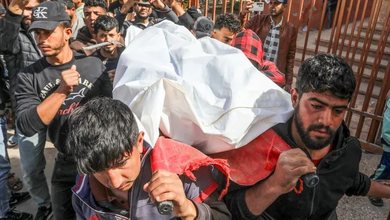
Meanwhile, on the ground, the fighting has not completely stopped. According to health authorities in Gaza, hundreds of Palestinians have been killed even after the October ceasefire agreement. In these conditions, reconstruction depends not only on funds, but also on permits, crossings and military control.
The so-called “yellow line,” a strip of territory off-limits to civilians, symbolizes this new reality: an area where movement is prohibited and control remains in the hands of the military. As long as these restrictions continue, any reconstruction project will be dependent on security decisions.
The analysis also makes a comparison with West Bank.
There, for years, declarations of temporary solutions have been made, while in practice control has gradually been consolidated through settlements and infrastructure. According to the organization Peace Now, the year 2025 has also seen further expansion of settlements. This is an example of how the reality on the ground can change as diplomatic processes continue.
Statements by Israeli Defense Minister Israel Katz, who has said that Israel “will never leave all of Gaza,” add to doubts that the military presence could last. If that happens, then reconstruction will take place within a framework of ongoing control.
Essentially, the main issue remains attraction.
Without a clear and measurable plan for reducing the Israeli military presence, the Peace Board risks being more of a political structure than a real step towards change.