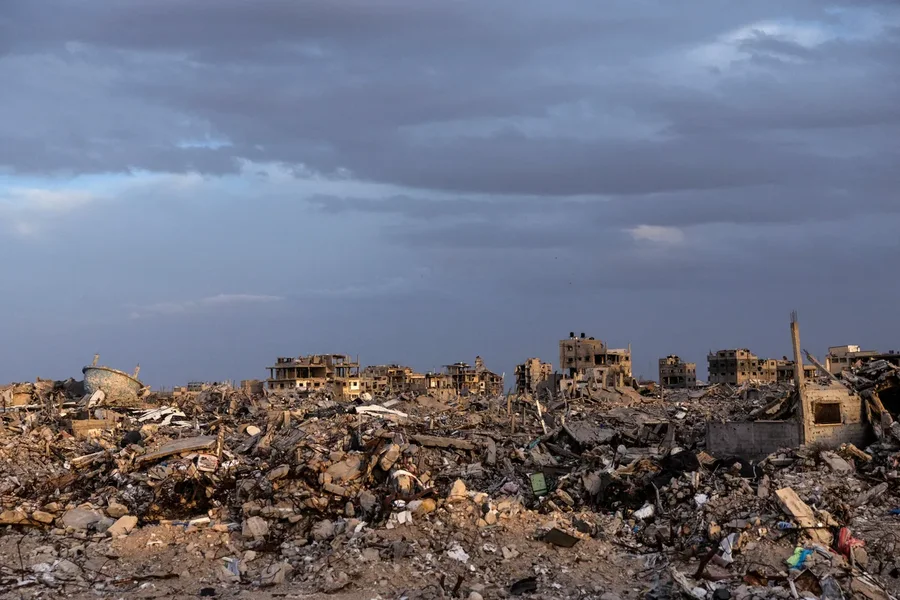
The United Nations Development Programme (UNDP) announced on Tuesday that clearing the rubble in Gaza, at the current pace, could take up to seven years, while most residents continue to live in extremely dangerous conditions.
In a virtual briefing from Jerusalem, following a recent visit to the Gaza Strip, UNDP head Alexander De Croo described the humanitarian situation as the worst he has seen in his years of development work.
"These are the worst living conditions I have ever seen, extremely painful conditions to live in," De Croo said, adding that "90 percent of the people in Gaza today live among these ruins, which is extremely dangerous."
Noting that UNDP's recovery efforts focus on three main areas, he said the first is the removal of debris and rubble.
"In terms of rubble removal, so far we have achieved about 0.5 percent of the total," De Croo said, adding that "at the current pace, it will take us seven years to remove all the rubble."
He emphasized the need for more authority and capacity to accelerate waste removal and recycling.
De Croo said the second priority is temporary shelter, as "90 percent of the population lives in conditions that you can't even call tents. They are very, very primitive tents."
UNDP has built 500 recovery shelter units and has 4,000 more ready, but needs significantly exceed current capacities, he explained.
"Between 200,000 and 300,000 units are needed to provide people with a better life, not the life they should have, but a better life than what is currently available," he added.
He said the third area is restarting the private sector in Gaza, which has largely been paralyzed. Recovery programs include limited investment and paid work schemes, he said.
To expand assistance, De Croo said UNDP has “a big request to the Israeli authorities, and that is to have more access” to materials, housing units and support for private businesses.
De Croo stressed that Israel's alleged security concerns should not be a reason to block greater access for UNDP, other UN organizations and international NGOs.
A US-backed ceasefire agreement has been in effect in Gaza since October 10, halting Israel's two-year war, which has killed more than 72,000 people, mostly women and children, and wounded over 171,000 others since October 2023.
Since the agreement came into effect on October 10, Israeli forces have committed hundreds of violations through shelling and gunfire, killing 603 Palestinians and wounding 1,618 others, according to the Gaza Health Ministry.