VNA brings in the "Forgotten Stories" column a document from 1964, which sheds light on political exiles and the rare open oppositional stance of writer Kasem Trebeshina towards the communist regime.
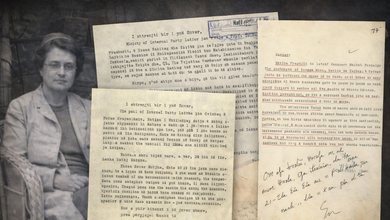
In January 1964, the writer, poet and playwright Kasem Trebeshina, one of the most problematic and incompatible figures with the communist regime, addressed a personal letter to the First Secretary of the Central Committee of the Albanian People's Party, Enver Hoxha. At the time, Trebeshina was exiled in the city of Gramsh, as part of the regime's punitive measures against intellectuals considered dangerous to the official line.
The letter, dated January 20, 1964 and signed by him, constitutes significant evidence of the reality of political exiles in Albania in the 1960s. In it, Trebeshina emphasizes that he has not committed any crime that would justify the measure of exile, describing it as unjust. However, he does not seek public rehabilitation nor does he openly challenge the decision of the government.
His request is minimal and at the same time shocking: to leave Gramsh. The writer presents two alternatives – complete release or, if this is not deemed possible by the authorities, internment in another country. He expresses his willingness to accept any location and any duration of the measure, as long as he no longer stays in Gramsh, a formulation that clearly reflects the severity of the conditions in which he lived.
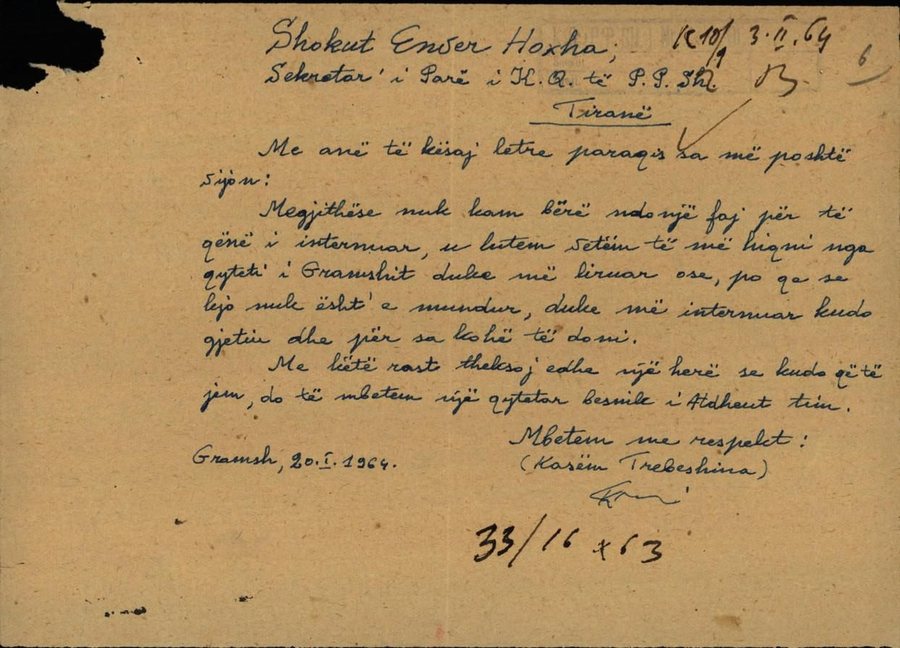
Written in Gramsh and dated January 20, 1964, this letter remains a document of particular historical value. It helps to understand the tense relationship between the government and critical intellectuals during the communist dictatorship, as well as the way in which individuals struggled to find minimal spaces for communication and survival within a deeply repressive system.
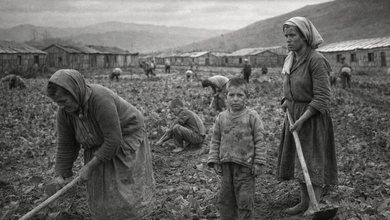
Kasem Trebeshina is among the few Albanian intellectuals who, together with Musine Kokalari, openly spoke out against the inhuman conditions of internment and refused to adapt to the humiliating reality that was imposed. He organized hunger strikes several times in protest, challenging the authorities even from within the camps and internment sites.
After his period in Gramsh, Trebeshina was removed from there and sent to Shijak, continuing his ordeal of deportations and punishments. His stance, also documented in this letter, remains one of the rarest examples of open intellectual rejection of the communist dictatorship in Albania.