The situation in the Middle East is once again in a volatile state, as nuclear talks that began on Friday between the US and Iran have not yielded any significant results and Donald Trump's threat to attack Tehran remains on the table.
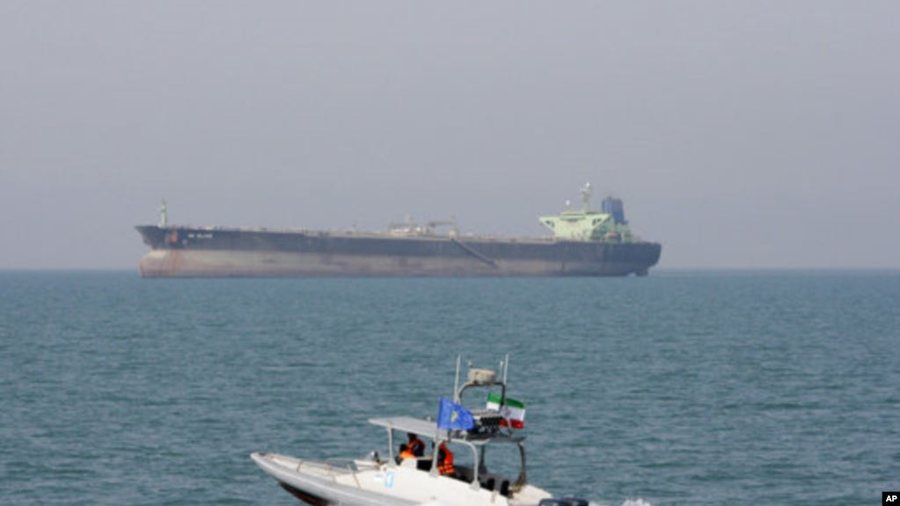
In this context, the United States has issued new guidelines for commercial ships passing through the Strait of Hormuz and the Gulf of Oman, as concerns about the safety of navigation in one of the world's most critical sea routes for oil supplies to the wider region are high.
According to guidelines published by the US Department of Transportation's Maritime Administration, commercial vessels flying the US flag are "encouraged to maintain the maximum possible distance from Iranian territorial waters, to the extent that doing so does not endanger the safety of navigation."
At the same time, crews are advised to verbally refuse any requests from Iranian forces to board the ship.
"It is recommended that U.S.-flagged commercial vessels transiting these waters stay as far away from Iranian territorial waters as possible without endangering navigation," the directive posted on the agency's official website said.
At the same time, the American side emphasizes that crews should not offer violent resistance in the event that Iranian forces board a US-flagged merchant ship.
"If Iranian forces board a US-flagged merchant vessel, the crew should not resist by force," the relevant text states.
The Strait of Hormuz has long been a point of friction, as a significant portion of it lies within Iran's territorial waters.
Tehran has previously threatened to close the sea crossing and has on several occasions seized commercial ships and tankers, citing violations or smuggling. The new US guidelines were issued as diplomatic processes are underway over Iran's nuclear program.
Although both sides have expressed their willingness to resume diplomacy over Tehran's long-running nuclear dispute with the West, Washington has made clear it wants the agenda of talks to expand to issues such as Iran's ballistic missile program, support for armed groups in the wider region and human rights abuses.
At the same time, US President Donald Trump on Friday further escalated pressure on Iran, signing an executive order that envisages imposing a 25% tariff on imports from any country that purchases, directly or indirectly, products from Iran.
The move implements a threat he made last month and is part of the broader framework of economic sanctions against Tehran.
Netanyahu and Trump to meet in Washington tomorrow
Israeli Prime Minister Benjamin Netanyahu and US President Donald Trump will meet tomorrow at the White House at 11:00 a.m. local time, according to Netanyahu's office.
Currently, no press conference or media statement is planned before or after the meeting.
Before boarding the Wing of Zion presidential plane for his flight to Washington, Netanyahu told reporters that he would "present to the president our approach regarding our principles in the negotiations."
These principles, he said, are important not only for Israel, but for every country in the world "that desires peace and security."
The two leaders will discuss "a range of issues," including Gaza, he says.
Netanyahu stressed that his repeated meetings with Trump are proof of the "uniquely close relationship" between Israel and the United States, as well as between him and the American president personally.