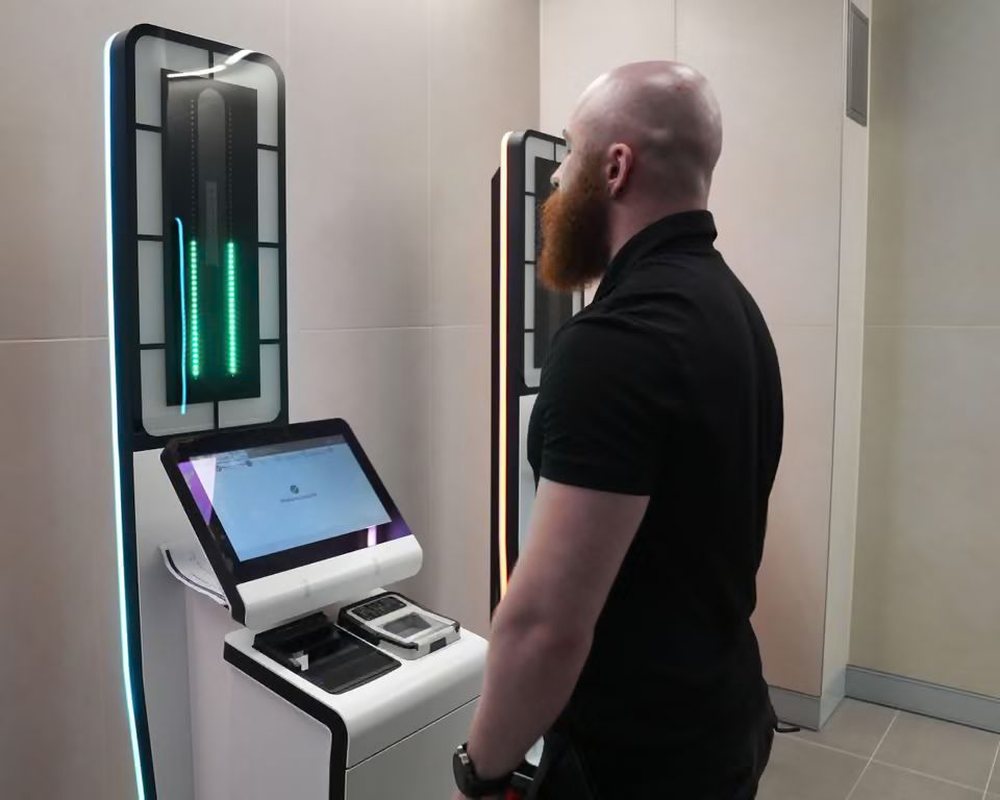
Travelers passing through some European airports are waiting up to three hours at border controls due to the new European Union Entry-Exit System (EES).
According to the airport organization Airports Council International (ACI), passengers at airports in countries such as France, Germany, Belgium, Italy, Spain and Greece are facing waits lasting several hours.
Olivier Jankovec, director of ACI's European division, told the Financial Times: "This situation, in the coming weeks and especially during the summer months when traffic reaches its peak, will become simply impossible to manage."
The EES system came into force on Friday in the Schengen area - 25 of the 27 EU countries, as well as Iceland, Liechtenstein, Norway and Switzerland. It requires travellers from non-EU countries, such as the UK, to register personal data and biometrics at the border.
The system has been gradually introduced since October and has already caused long delays at some airports. On Sunday, the BBC reported that more than 100 passengers were unable to board an easyJet flight from Milan to Manchester due to delays at passport control.
Airports and the European Commission met on Tuesday to discuss the problems with the system. ACI is said to have called for an extension of existing exemptions, as well as the possibility of suspending new checks altogether.
Jankovec told the Financial Times that the ACI should have the ability to “completely suspend EES registration whenever waiting times at border control become excessive and unmanageable.”
A European Commission spokesman said: "From the first days of full operation we can see that the system is working very well. In the vast majority of member states there are no problems."
The commission said the average passenger check-in takes about 70 seconds, although ACI claims it can take up to five minutes.
The spokesperson added that there are "some member states where technical problems have been identified", but that they are "being addressed".
He added: “It is up to member states to ensure the proper implementation of the EES on the ground.”
The commission also said that since the system was introduced in October, more than 52 million entries and exits have been registered, as well as over 27,000 entry refusals. Of these, almost 700 people have been identified as security threats.
On the eve of Easter and before the full entry into force of the EES on 10 April, travellers crossing the Channel from Britain to France were told that they did not have to provide biometric data due to delays in developing the technology needed in France to collect and process this data.
The EES problems come as European airports brace for a possible disruption to jet fuel supplies due to the blockade of the Strait of Hormuz. On Friday, ACI wrote to EU energy and transport commissioners warning that the bloc could face systemic shortages within three weeks.
Europe consumed about 1.6 million barrels of jet fuel per day last year, of which about 500,000 were imported, according to the International Energy Agency. About 75% of these imports come from the Middle East.
Michael O'Leary, the chief executive of Ryanair, said the EES system was causing queues of up to four hours at some airports, describing it as "a mess and a total failure" and a punishment for Brexit. He suggested the EU should delay the full implementation of the system until October.