A report by the international human rights organization, Human Rights Watch, claims that the Israeli army has used white phosphorus munitions in the village of Yohmor, in southern Lebanon.
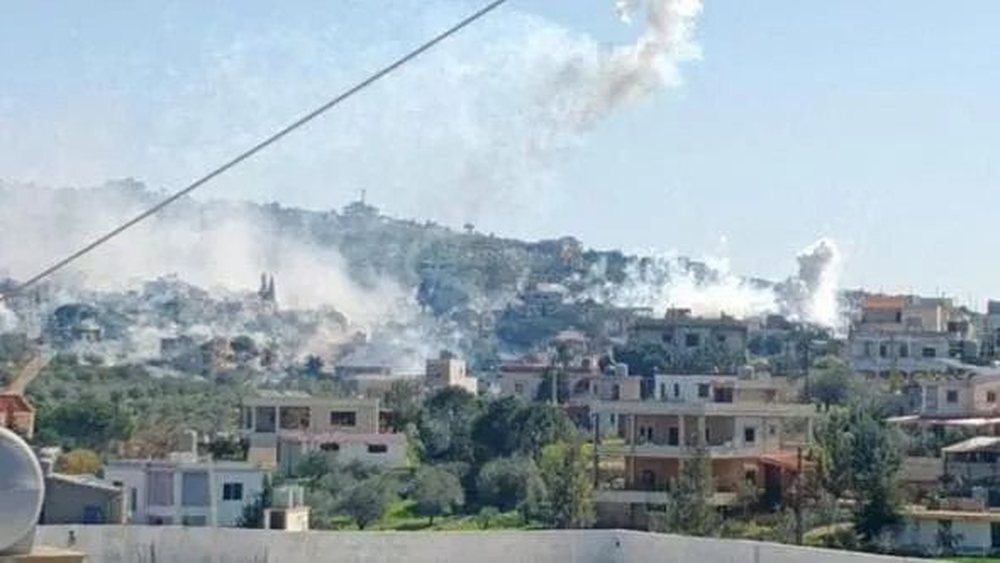
According to the report, the organization has verified and geolocated seven photographs taken in early March, showing white smoke rising over a residential area as civil defense teams try to extinguish fires that broke out in two houses and a vehicle.
The first photo was posted on social media on the morning of March 3 and shows smoke plumes that, according to Human Rights Watch, are "consistent with M825 155-millimeter ammunition containing white phosphorus."
That same day, at 5:27 a.m., the Israeli military's Arabic-language spokesman, Avichay Adraee, called on residents of Yohmor and about 50 other villages to move at least one kilometer away from residential areas. The same warning was repeated six hours later.
In military operations, white phosphorus is used for various purposes, such as creating smoke screens that limit visibility, for signaling, or even to hit enemy targets. Depending on the height of the explosion, such a projectile can disperse chemical fragments over an area up to 250 meters in diameter.
“The incendiary effects of white phosphorus can cause death or very painful wounds that do not heal easily,” explains Ramzi Kaiss, the Lebanese researcher at Human Rights Watch who led the investigation.
The organization also analyzed two other photos released by the Islamic Health Committee, a health authority affiliated with Hezbollah. The photos were taken after the attack and show houses on fire. According to Human Rights Watch, metadata analysis shows that they were taken less than 160 meters apart.
This is not the first time that the Israeli military has been accused of using such munitions in Lebanon. There is currently no specific, comprehensive ban on white phosphorus, but its use could violate restrictions on incendiary munitions set out in Protocol III of the Convention on Conventional Weapons. According to this convention, these weapons must not be used against civilian targets. Lebanon has been a party to this agreement since 1983, while Israel is not a party to it.