In Germany, cash payments are still possible, but not as much as they used to be. In a survey conducted in October 2025 among 1,000 people in Germany, 30 percent of them said they had not been able to pay with cash in a cafe or shop in the previous six months because it was not possible.
A study by the Bundesbank showed that in government institutions, for example when issuing identity documents, cash payments are not always possible.
Some stores no longer accept cash at all, and new self-service checkouts in supermarkets often only accept bank card payments. In the retail sector, with a total of around 710,000 checkouts, there are now almost 40,000 self-service checkouts, compared to just over 16,000 in 2023.
Transport tickets, parking fines or swimming pool tickets sometimes cannot be paid with cash or can only be paid with additional complications.
Who can't do without cash?
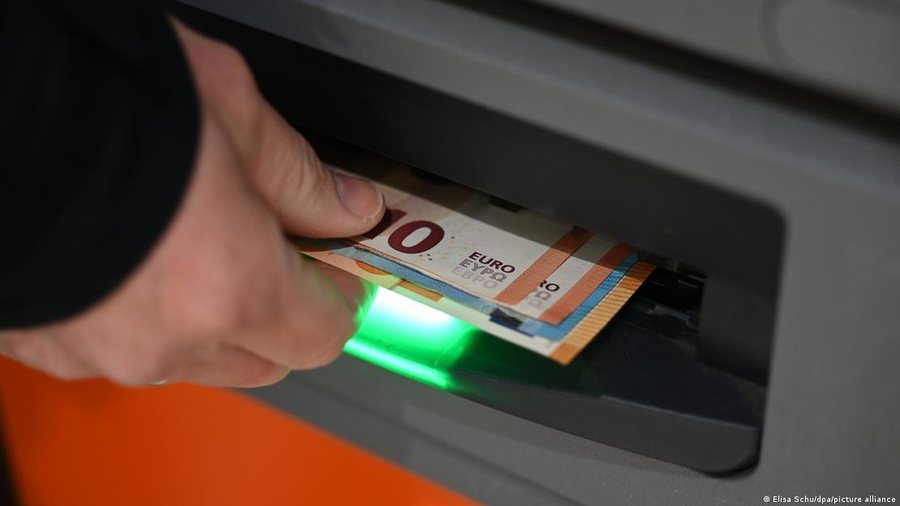
At the same time, there are fewer and fewer places to withdraw money, as ATMs are being removed and alternatives such as supermarket cash registers are not available everywhere, nor are they free everywhere. This is particularly a problem in rural areas, where people have to travel greater distances to get cash.
Cash is essential for children, the elderly, and people without bank accounts, as well as for those who have difficulty making digital payments due to limitations in technical knowledge.
People in difficult life circumstances, such as those in debt or homeless, are often left with no other payment options - other than cash.
Payments are practical...
For retailers and service providers, cashless payments are practical - because the risk of theft is reduced, as are the costs of services.
But as banks reduce the number of branches and ATMs - depositing cash proceeds into the bank becomes significantly more difficult and costly.
These problems reinforce each other: the fewer opportunities to access cash, the greater the barriers for consumers. If this trend continues, cash may soon no longer be usable as a means of payment for both consumers and businesses, requiring costly changes to the cash infrastructure - as can currently be seen in Scandinavian countries such as Sweden.
There, many shops and restaurants no longer accept cash at all, and there are no ATMs nearby.
In Sweden, around 80 percent of purchases are made digitally. Cash is still only recommended in emergencies, for example when computer systems fail.
Appeal of organizations in Germany
German consumer associations and social organizations have called on the government in an appeal on January 29, 2026 - to adopt a law on the protection of ready-made goods.
"The legislator must ensure that cash is generally accepted as a means of payment and that everyone has access to cash free of charge and without barriers - whether through ATMs or other solutions," says the appeal signed by a total of 14 organizations.
With such a law, the federal government can implement its goal from the coalition agreement - to preserve cash and give consumers freedom of choice when making payments. According to Article 2 of the Constitution, paying with cash is even part of a general right of the individual.
The appeal has been signed by the largest social organizations in Germany, including those of the Evangelical and Catholic churches, as well as the Federal Association of Consumer Protection Centers, the Workers' Charity Organization, the German Children's Fund, the Federal Association of Pensioners' Organizations, as well as associations from the trade fair industry and the bakery trade.
Advantages and disadvantages
These organizations say cash remains a reliable means of payment in crises - in the event of major breakdowns, cyberattacks or natural disasters - and it works without electricity or the internet.
However, if larger amounts are kept at home, then there is a greater risk of that money disappearing - due to theft or natural disasters such as floods.
Cash protects privacy and allows independence from digital systems and easy control of one's spending. But cash also partly facilitates anonymous transactions and the illegal economy.
Cash encourages social interaction in everyday life: activities of various associations, church communities, schools, neighborhood initiatives and other programs are often only feasible with cash. These include charity and school markets, various local fundraising campaigns or direct assistance to the homeless.
European Union strengthens cash
At the end of November, the European Parliament and representatives of the 27 member states reached an agreement on a package of laws that should facilitate access to cash in rural areas.
Once the laws are passed, consumers will be able to withdraw up to 150 euros at the cash register in stores, even if they don't buy anything. Until now, this has only been possible in most supermarkets with simultaneous purchases and card payments. In Germany, most bank customers can currently withdraw up to 200 euros this way./DW/