


By Desada Metaj
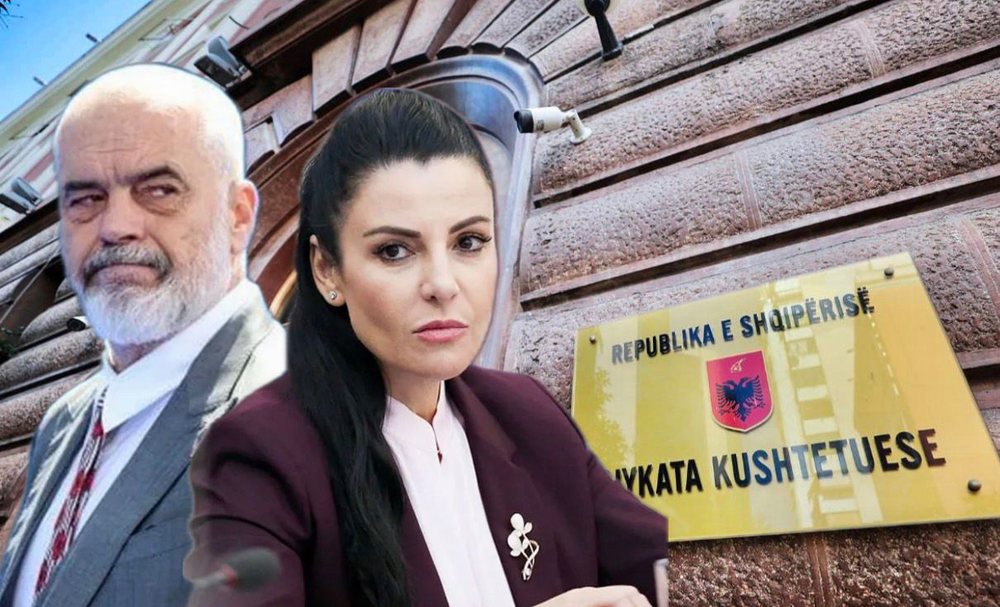
One of the first questions that naturally arises, as soon as the decision of the GJKKO to suspend Deputy Prime Minister Belinda Balluku from office has been made public, is whether the law actually provides for such a possibility. This question comes not only from the lack of legal recognition in the public – which is completely reasonable – but especially because this is the first decision of this kind in at least 35 years of the post-dictatorship state order. The height of executive power in Albanian political culture, coupled with the mythologizing of political figures by the not-fully-democratized society itself, clothes this event with skepticism. In fact, this is a strong breaking of a taboo that characterizes unemancipated or even hybrid democracies.
In such cases, the simplest and fairest solution is to refer to the law and read it directly. Public speculation will not be lacking, but the obligation to inform citizens of the legal truth is one of the first steps that must be taken.
The basic – and only – law that should be consulted on this issue is the Criminal Procedure Code. It is this Code that defines the powers of the prosecution and the court, as well as the possibility of granting such a security measure.
The Code of Criminal Procedure, in Title V “Security Measures”, divides them into two main categories: personal security measures and prohibitive measures. Prohibitive measures, according to Article 240, include the suspension of the exercise of a public duty or service, which is the measure applied in the Balluku case.
Article 242 of the Code of Criminal Procedure stipulates that the court may suspend any public function that does not derive from election through electoral law. The only exception relates to functions that derive directly from the sovereign through elections, namely members of parliament, mayors and municipal councilors. This legal solution is related to the principle of separation of powers and the supremacy of the democratic will.
For all other public officials – that is, those appointed or designated – the court has full authority to impose suspension. This includes ministers, deputy prime ministers, and even the cases of the Prime Minister, since he also exercises a function obtained through the process of appointment and decree, not by a direct vote from the sovereign.
In the case of Ms. Balluku, the court has suspended the exercise of the function of “minister” and “deputy prime minister”, because these are functions assumed not by election but by decision of the Assembly and by decree of the President, i.e. functions that the law considers suspendable. In the meantime, she continues to exercise the function of “deputy”, because this is a function that emanates directly from the sovereign through the electoral process and for this reason the court has no jurisdiction to limit it.
In this way, the decision of the GJKKO is fully within the provisions of the Criminal Procedure Code, although for the first time in Albanian practice, marking an important precedent in strengthening the standard of the rule of law.
This precedent, according to the same legal logic, would also be applicable to the Prime Minister, as long as he holds an appointed function and not one directly voted by the citizens, confirming that no level of appointed executive power is beyond judicial control.
In this situation, Edi Rama does not have many options. Because it is not just Belinda Balluku at stake; it is Edi Rama himself at stake – or rather, the post of prime minister that he has held for more than a decade. The GJKKO decision does not affect just one minister: it affects the political architecture on which Rama has built all his power.
The first approach is to dismiss Balluku. This is the simplest step on the surface, because formally Rama has the freedom to do so (it is not known how much Balluku would agree with this solution!). But in reality, even dismissal does not solve anything. Security measures do not disappear with a signature from the prime minister; the investigation continues, the court continues, SPAK continues. Dismissal could ease the public pressure of the moment, but politically it does not save Rama from the danger he faces. Justice may be blind - as a French proverb says - but it is capable of finding even a needle in a haystack! And there is a lot to find in Rama's stable.
The second approach is silence: not to dismiss Balluku, but not to oppose justice either. This is the most neutral, most invisible and least dangerous path on the surface. But there is a fundamental problem: it contradicts the narrative of his political constructions for 15 years in a row. Rama is used to positioning himself as the man "who precedes events", which is 3 moves ahead in chess, the one who has a solution for everything. Whereas with this approach he would lose this fascination that he has built with so much effort, and on which his power rests. Now this appearance has begun to fade. The absence of a text in the Balluku case proves this. The events came without warning, he could not precede them, he could not predict them, he could not stop them. There is no resignation and no dismissal. In this case, silence sounds not like a choice, but like helplessness. And this is the punishment, not just symbolic, that Edi Rama would never want to receive: the loss of the myth of control.
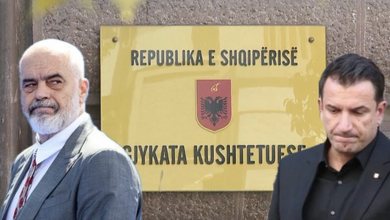
The third approach is a frontal reaction by challenging the decision in the Constitutional Court. This is the strongest scenario politically, but also the most dangerous. The challenge would not come from Balluk (who, even if she wanted to, could not legally do so), but would have to come directly from the prime minister as a representative of the government. The problem is that the legal provision is clear: the exemption from the court's competence to suspend from office applies only to MPs, mayors and municipal councilors, but not to ministers and not to the prime minister. And yet, this technical path exists.
But at what cost?
At a double cost:
First, Rama must come out openly as an opponent of the Justice Reform. No longer with coded messages, no longer with half-words, but officially and frontally. Anyone could read this as the clearest signal that he would become the main obstacle to the European integration process – a process that, in essence, has SPAK and the new justice institutions at its heart.
Second, he must assume the role of the one representing the “Prime Minister’s Republic” that openly fights the “Republic of Prosecutors,” as those around him have long called the new justice structure. This would be the moment when the old narrative of three decades of politics finally falls apart: that of Albanian politicians who behave as pro-Europeans in statements, but act like the most authoritarian regimes in practice.
Regardless of how it would eventually end up in the Constitutional Court – no one can know in advance – this path would ultimately strip Rama of any semblance of neutrality towards justice and place him in the open position of challenging it.
And ultimately, the case would – once again – end up before another link in the Justice Reform: the Constitutional Court. With one difference: this time, not only Balluku, but Rama himself would be on the political bench.