


The impending global food crisis is preventable. So why won't it be prevented?
Four years ago, the world avoided a humanitarian catastrophe, or at least it seemed so, writes The Economist.
One major grain producer, Russia, invaded another, Ukraine. Fears of food shortages spread to poor countries that could not afford suddenly high prices for wheat and other staples.
Then, the two sides agreed to allow ships loaded with grain to sail from their ports in the Black Sea. Markets calmed down; famine disappeared from the headlines. But not from the lives of the poor.
The war in Ukraine is thought to have caused more casualties in the global south than on the battlefields of Eastern Europe.
Now a war in the Persian Gulf threatens a similar disaster of slow development outside the conflict zone. The poor in Africa and Asia are already producing less on their plots and eating fewer meals.
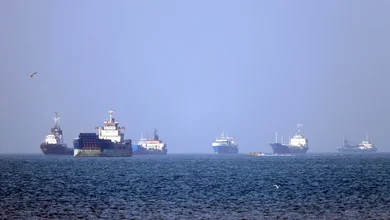
The UN World Food Programme warns that if the Strait of Hormuz is not opened by mid-year, 45 million more people will be added to the more than 300 million people already struggling to feed themselves. The world could help avert this scenario. The tragic reality is that it will not.
Although Iran and its neighbors are not major food exporters, they are a critical link in agricultural supply chains. The blockaded region sells 30% of the world's traded chemical fertilizers, 20% of its liquefied natural gas (used as a feedstock for fertilizer production and as a cooking fuel), and 15% of its oil (needed to power agricultural equipment).
If the nearly 2 million tons of chemical fertilizers stuck behind the strait don't start moving soon, many crops will not receive the nutrients they need during the growing season. Yields will drop sharply, prices will rise, and many poor urban dwellers will face hunger.
Fertilizer shortages will hurt the poor world’s agricultural businesses more than subsistence farmers, who use few of these inputs anyway. But rural areas will bear the brunt of a geophysical catastrophe that is expected to exacerbate the geopolitical one.
The world is set to be hit by the El Niño climate phenomenon, which temporarily warms the planet every few years and creates a pattern of droughts and floods around the world. This phenomenon could be particularly powerful.
Although the milder effects of El Niño outside tropical areas can help farmers in those regions, in poorer countries, its consequences are very often negative.
Argentina and Uruguay typically experience excess rainfall; Southern Africa, India, and Southeast Asia experience deficits. The 2015–16 El Niño reduced food crop production by up to two-thirds in some southern African countries.
The last El Niño, in 2023–24, brought the worst drought in 100 years to the region as a whole. Agricultural production was severely damaged and thousands of cattle and other animals died. According to the World Bank, more than 30 million people were in need of food aid.
The real strength of this year's El Niño won't become clear until the Northern Hemisphere summer, but one thing is already certain.
It will be added to accelerating global warming, which is making dry regions drier and wet regions wetter. It will pile extremes on top of extremes, both in climate and in poverty.
The worst can still be avoided. Much of the necessary chemical fertilizers already exist and there is still time, in some regions, to use them on this year's crops.
Although no amount of water can save a crop destroyed by landslides or scorched by drought, careful use can limit some of the damage of El Niño. The world is not short of food calories.
Much of the corn used to produce ethanol for cars could instead be used to feed people.
And while governments in rich countries spend money to protect their citizens from the fuel price shock caused by the Gulf War, they have the means to finance food aid to the poor world.
So much for the theory. Iran should allow chemical fertilizers to pass through the Strait of Hormuz; the US should not block urea shipments from Iran.
Tragically, neither side shows any willingness to do so. High gasoline prices make biofuels more attractive to farmers, not less. And rich countries are acting selfishly. Failure to act seems inevitable. In the face of a preventable catastrophe, this is shameful.